




"Everything You Need To Know About Website Development " -
professional ,clear,and SEO-friendly.

What Is Website Development ?

**Website development** is the process of creating, building, and maintaining a website so that it works properly on the internet. It includes everything from developing the website’s structure and functionality to making it responsive, secure, and user-friendly.Website development generally involves **front-end development**, which focuses on what visitors see and interact with, and **back-end development**, which handles the website’s server, database, and underlying functionality. Developers use technologies such as **HTML, CSS, JavaScript, PHP, Python, and various frameworks or CMS platforms** to build websites.A well-developed website should be **fast, mobile-friendly, easy to navigate, secure, and optimized for search engines**. For businesses, website development helps create a professional online presence, showcase products or services, generate leads, and provide customers with a smooth digital experience.

Why Does Your Business Need a Website?

In today’s digital world, a website is an important part of building a strong and professional business presence. It gives potential customers a place where they can **learn about your business, explore your products or services, read reviews, and contact you** at any time. A well-designed website can build credibility and trust by clearly presenting your brand, expertise, services, and business information. It also helps your business become more visible on search engines, allowing potential customers to discover you when they search for relevant products or services. Unlike social media platforms, where content and visibility depend heavily on the platform, your website gives you greater control over your online presence and customer experience. A website can also support **lead generation, online sales, bookings, enquiries, and customer communication**, depending on your business model. With mobile-friendly design, fast loading speed, clear navigation, and useful content, your website can provide a convenient experience for customers across different devices. Overall, a professional website works as a **24/7 digital presence** for your business and can help strengthen your brand, reach more customers, generate opportunities, and support long-term business growth.

The People Behind Your Website

A successful website is more than just design and technology—it is created by a team of skilled professionals working together. **Designers** focus on creating an attractive and user-friendly interface, while **developers** build the website’s functionality and ensure everything works smoothly. **Content writers and SEO specialists** create useful content and optimize the website for better search visibility. **Project managers and digital marketing experts** help align the website with your business goals and target audience. Together, this team ensures your website looks professional, performs effectively, provides a great user experience, and supports your business growth.

What Is Domain?

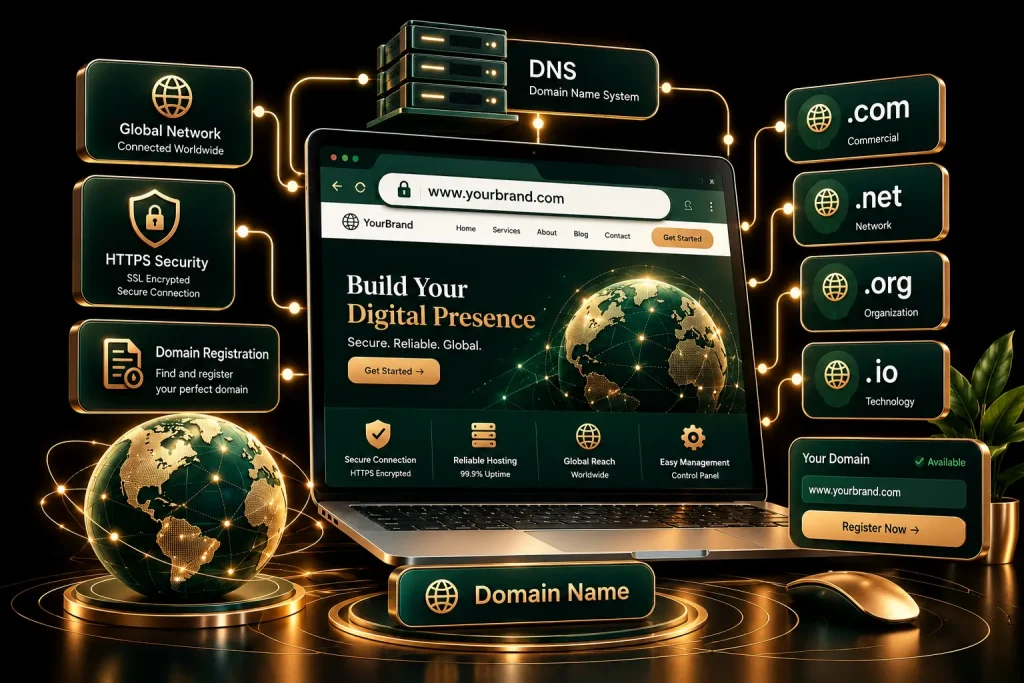
A **domain** is the unique web address that people use to find and access a website on the internet. Instead of remembering a website’s numerical IP address, users can simply type a domain name into a browser, such as **example.com**, to visit the website. A domain usually consists of a **name** and a **domain extension**, such as `.com`, `.org`, `.in`, or `.net`. For example, in `khushitechs.com`, **“khushitechs”** is the domain name and **“.com”** is the extension. A good domain should be **short, memorable, relevant to the business, easy to spell, and easy to pronounce**. Businesses use domains to create a professional online identity, build brand recognition, and make their websites easier for customers to find. A domain is registered through a **domain registrar** for a specific period and must generally be renewed to keep ownership of the web address. In simple terms, a domain is the **digital address of your website**, helping customers locate your business online.

What Is Hosting?

**Web hosting** is a service that stores your website’s files, images, videos, databases, and other data on a special computer called a **web server**. When someone enters your website’s domain name in a browser, the hosting server delivers your website’s content to their device. In simple words, **hosting gives your website a place to live on the internet**. A good hosting service helps your website load quickly, stay available, and remain secure. Hosting providers also commonly offer features such as **SSL certificates, backups, storage, email accounts, security tools, and technical support**. Choosing reliable hosting is important because server performance can affect your website’s speed, user experience, and overall performance.Web hosting also plays an important role in your website’s speed, security, reliability, and performance. A good hosting service provides features such as SSL certificates, regular backups, security protection, sufficient storage, bandwidth, and technical support. Different types of hosting, such as shared hosting, VPS hosting, dedicated hosting, and cloud hosting, are available depending on the website’s size, traffic, and business requirements. 

A Complete Guide To Web Hosting Types

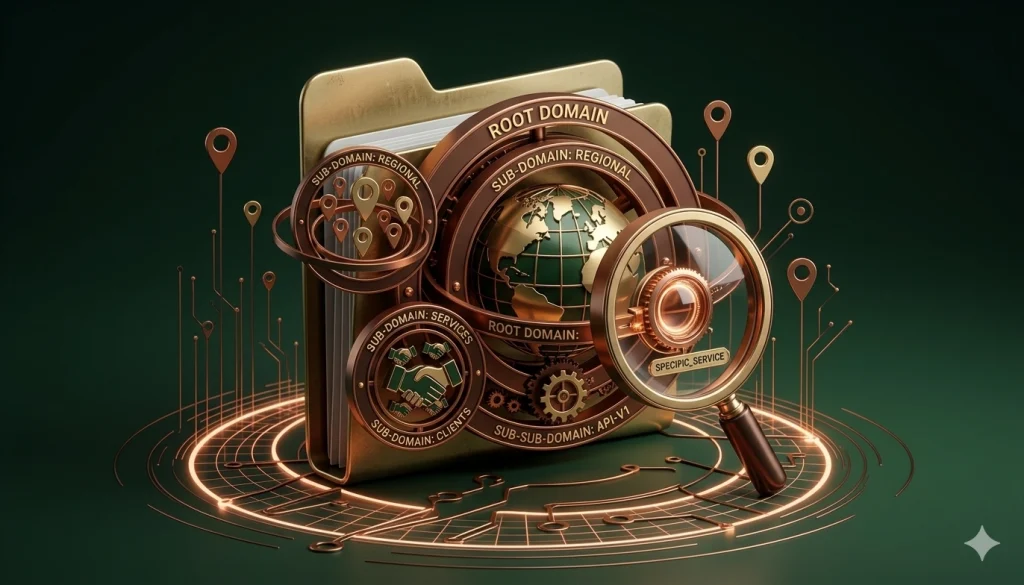
What Is Sub Domain?

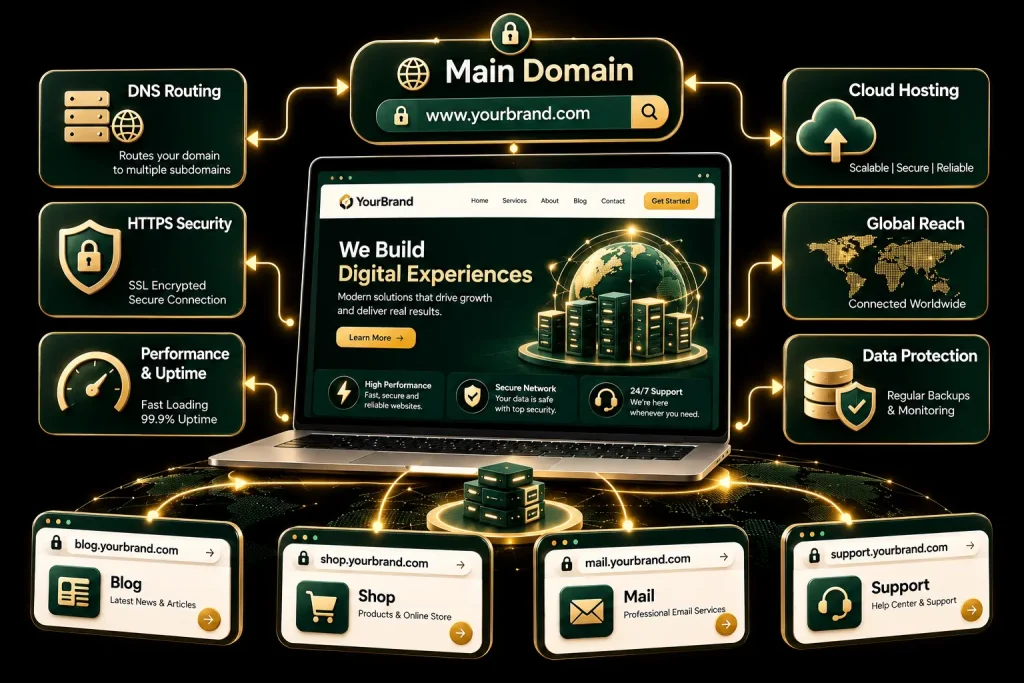
A **subdomain** is an additional section of a website that is created under the main domain name. It allows you to organize different parts of a website separately while still being connected to the main domain. A subdomain is placed **before the main domain name**, for example, `blog.example.com`, where **“blog”** is the subdomain and **“example.com”** is the main domainSubdomains are commonly used when a business wants to create a separate area for a specific purpose, such as a **blog, online store, customer portal, learning platform, or support section*. 

**Example:** If your main website is `khushitechs.com`, you could create:

* `blog.khushitechs.com` → Blog  ,  `shop.khushitechs.com` → Online stor

Key Difference Of Domain and SubDomain

Domain

Sub Domain

A **domain name** is the unique address that people use to access a website on the internet. It represents the main identity of a website or business. For example, if a company’s website is `khushitechs.com`, then **khushitechs.com** is its domain name. A domain usually consists of a **name** and a **domain extension**, such as `.com`, `.in`, `.org`, or `.net`. Businesses use domains to establish their online identity and make their websites easy for users to find and remember. A domain must generally be registered through a domain registrar and renewed periodically. Example:* khushitechs.com` → Main domain   Here, `khushitechs` is the domain name and `.com` is the domain extension.

A **subdomain** is an additional part of a website created under the main domain. It is placed **before the main domain name** and can be used to organize a specific section or function of a website.A subdomain is useful when you want to create a separate area with a specific purpose while keeping it connected to your main brand. 

  For example: `blog.khushitechs.com` → Blog section     * `shop.khushitechs.com` → Online store             *support.khushitechs.com*Customersupport  support ` learn.khushitechs.com` → Learning platform In `blog.khushitechs.com`, **“blog” is the subdomain**, while `khushitechs.com` remains the main domain

What Is Website?

A **website** is a collection of connected web pages and digital content that is available on the internet through a specific **domain name or web address**. It can contain different types of information, such as text, images, videos, graphics, forms, products, services, and interactive features. Users can access a website through an internet browser such as Chrome, Safari, Edge, or Firefox by entering its web address or clicking a link.  A website is stored on a **web server through a hosting service**. When a user visits the website, the browser sends a request to the server, which then delivers the required files and content to the user’s device. Websites are generally built using technologies such as **HTML, CSS, and JavaScript**, while platforms like WordPress can also be used to create and manage website . Individuals may use websites for blogs, portfolios, education, or personal projects. A well-designed website should be easy to navigate, mobile-friendly, fast, secure, and useful to its visitors.

**Example:**’khushitechs.com` → This is a website where visitors can learn about the company’s digital marketing services.

Two Types Of Website

STATIC WEBSITE

DYNAMIC WEBSITE

 A simple words, a static website shows fixed content to visitors. For example, a small business website with pages such as Home, About Us, Services, Portfolio, and Contact Us can be built as a static website when the information does not need to change based on each visitor.A static website is a website where the content is already created and stored as ready-to-display files, mainly HTML, CSS, and JavaScript. When a visitor opens a page, the server generally sends the same pre-built content to the browser instead of generating a new page from a database for each request

A static website commonly uses:

  • HTML – creates the structure and content.
  • CSS – controls design, layout, colors, fonts, and responsiveness.
  • JavaScript – adds interactive features and animations.
  • Images/Media – provide visual content.

 Static websites can still have interactive JavaScript features; “static” mainly refers to how the site’s core content is delivered rather than meaning the website must look or behave completely static.

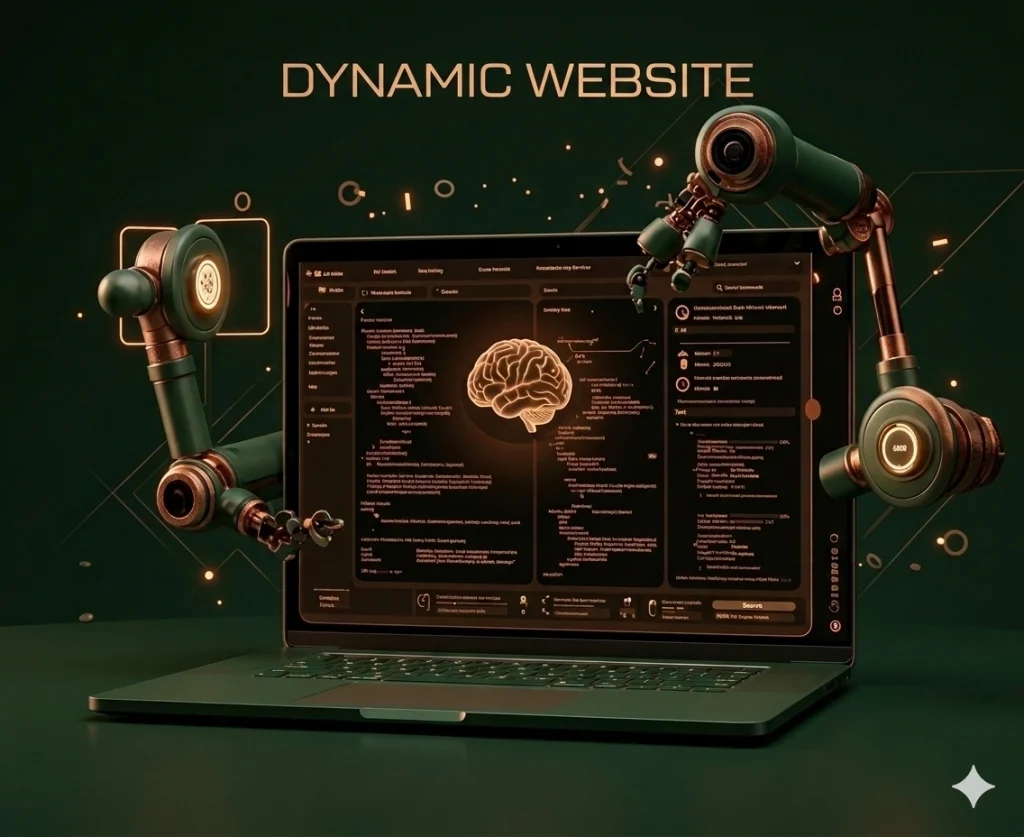
A dynamic website is a website whose content can be generated, updated, or personalized automatically based on information from a database, user actions, login status, location, time, or other conditions.    For example, on an e-commerce website, different users can see different products, prices, recommendations, shopping carts, and account information. This is possible because the website uses server-side programming, databases, APIs, or other dynamic systems.

Dynamic websites commonly involve several technologies:

HTML – structures the webpage.

CSS – controls the appearance and layout.

JavaScript – adds interactive functionality.

PHP, Python, Java, Node.js, etc. – can handle server-side processing.

MySQL, PostgreSQL, MongoDB, etc. – store website data.

APIs – allow the website to communicate with other services or applications.

Categories of Website

Portfolio Website

Blog Website

A portfolio website is a personal or professional website used to showcase a person’s skills, experience, projects, achievements, and work in one place. It acts as an online profile where potential clients, employers, or collaborators can see what you can do and learn more about your work.

A blog website is a website where individuals, businesses, or organizations regularly publish articles, information, opinions, guides, news, or educational content. Blog posts are usually displayed with the latest content first, making it easy for visitors to discover new articles.

News Website

A news website is an online platform that provides the latest news, information, and updates about events happening around the world. These websites cover different topics, such as politics, business, sports, entertainment, technology, education, health, and weather

Entertainment Website

An entertainment website is an online platform designed to provide users with fun, enjoyment, and relaxation through digital content. These websites allow people to watch movies, TV shows, web series, music videos, and comedy clips, listen to songs, play online games, and explore celebrity news.

Personal Website

A personal website may include sections such as an About Me page, portfolio, blog, resume, achievements, hobbies, and contact information. Students can use personal websites to showcase their projects and skills, while professionals can use them to highlight their experience and attract career opportunities

Educational Website

An educational website is an online platform designed to provide educational information, learning materials, and resources to students, teachers, and anyone who wants to gain knowledge. These websites help people learn new subjects, develop skills, prepare for examinations, and access study materials from anywhere using the internet.

E-commerce Website

E-commerese websites often have payment options and order‑tracking tools. Examples are stores, marketplaces and retail sites. This website is a place where businesses can display their products or services and sell them using payment to complete transactions. 

Business Website

A business website is made to show a company or brand on the internet. This website gives details, about the products, services, the company and how to contact. Businesses use a business website to build trust and draw in customers. A business website can also help gather leads and aid marketingA business website is made to show a company or brand on the internet. This website gives details, about the products, services, the company and how to contact. Businesses use a business website to build trust and draw in customers. A business website can also help gather leads and aid marketing

Social Media Website

 social media website lets people make profiles and link up with others over the internet. On a media website users can post pictures, videos, messages and other kinds of content. The social media website also gives tools for talking, interacting and making communities. 

What Is URL?

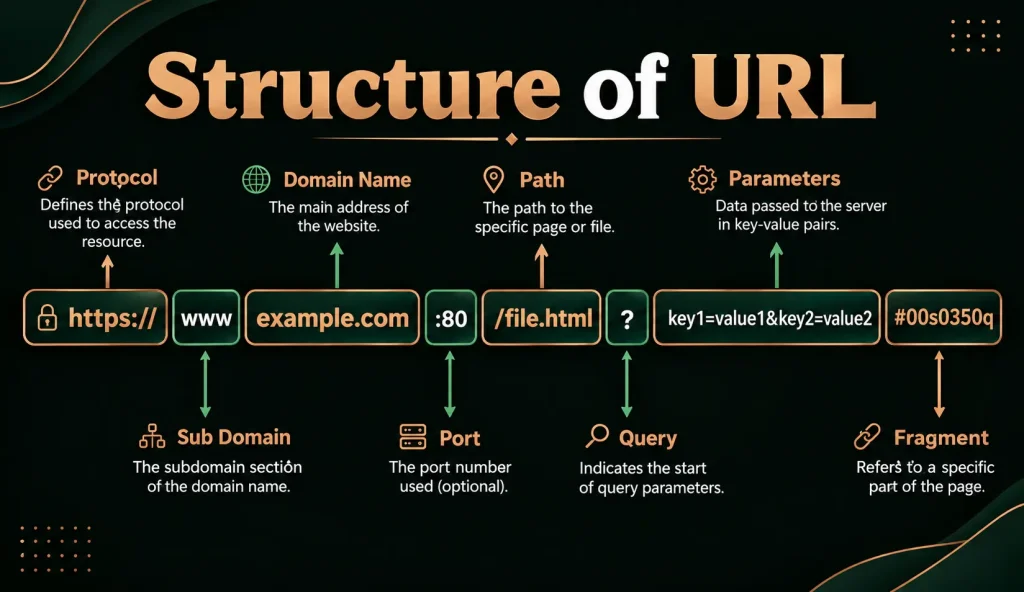
A URL (Uniform Resource Locator) is the complete web address used to find and access a specific resource on the internet, such as a website, webpage, image, video, or document . For example, `https://www.khushitechs.com/seo` is a URL that can direct visitors to the SEO page of a website. When you enter a URL into a browser such as Google Chrome, the browser uses that address to locate the requested webpage and display its content. A URL generally consists of several parts, including the protocol (HTTPS), domain name (khushitechs.com), and path (/seo). The protocol specifies how the browser communicates with the website, the domain name identifies the website, and the path identifies a particular page or resource within it. URLs are important in digital marketing because they help users navigate websites, share web pages, and access online content. They also play a role in SEO, as clear, descriptive URLs can help search engines and users understand what a webpage is about. For example, a URL such as `www.khushitechs.com/content-marketing` is more descriptive than a URL containing random letters and numbers. 

Frequently Asked Questions

A Content Management System (CMS) is a platform that allows users to create, edit, and manage website content without needing advanced coding skills.

Popular CMS platforms include WordPress, Joomla, Drupal, Shopify, and Wix. Each platform offers different features for website development.

A CMS makes website management easier, saves time, simplifies content updates, and allows multiple users to manage website content.

Yes, many CMS platforms support SEO-friendly URLs, metadata, headings, and plugins that help improve website visibility in search engines

A CMS website can be secure when you regularly update the platform, themes, and plugins, use strong passwords, and maintain regular backups.

You have been successfully Subscribed! Ops! Something went wrong, please try again.

About Us

At Khushitechs, we believe every brand has a story worth being seen. We combine creativity, technology, data, and smart digital strategies to help businesses build a stronger online presence.

Scroll to Top