
Digital Marketing Trends to Watch in 2026
Digital marketing is constantly evolving.What proved effective for businesses in the past may not yield the same results today.Consumers are spending more time online, search behaviors are shifting, and emerging technologies are offering companies new ways to engage with their audience.
For businesses, this ongoing change brings both opportunities and challenges.
There’s always a new platform, tool, or marketing approach to explore.However, this doesn’t mean every emerging trend should be adopted.
The key is to understand what’s changing and determine which trends are relevant and beneficial for your specific business.
If you're developing your digital marketing plan for 2026, here are ten significant trends you should keep in mind.
Artificial intelligence has quickly become a part of everyday marketing.
Businesses are using AI to come up with content ideas, understand customer behavior, analyze data, write
initial drafts, automate repetitive tasks, and improve customer support.
But there is one important thing to remember: AI should be treated as a tool, not as a replacement for
human thinking.
People still want content that feels genuine. A completely automated marketing campaign can easily sound
repetitive or impersonal. Businesses can use AI to save time while keeping human creativity and strategy
involved.
You do not have to look very far to see how popular short videos have become.
Instagram Reels, YouTube Shorts, and other short-form video platforms have changed the way people
consume content. Users often decide within a few seconds whether they want to keep watching.
For businesses, this creates a great opportunity.
You can use short videos to show your products, explain services, answer common questions, share quick
tips, introduce your team, or show what happens behind the scenes.
The video does not always need to look like a professional advertisement. In many cases, simple and
authentic content can feel more trustworthy.
Customers are tired of seeing the same generic message everywhere.
Personalization allows businesses to make their marketing more relevant to individual customers.
For example, an online store might recommend products based on previous browsing behavior. An email
campaign might send different messages to people depending on their interests.
Even small changes can make a difference. Using relevant offers, useful recommendations, and audiencespecific content can make customers feel that a business actually understands them.
Having a large number of followers can look impressive, but followers alone do not guarantee business
growth.
What matters is whether people are actually interested in what you are sharing.
In 2026, businesses should focus more on building genuine relationships with their audience. Responding
to comments, asking questions, sharing useful information, creating polls, and encouraging customers to
share their experiences can help create a stronger community.
Social media works better when it feels like a conversation rather than a constant sales pitch..
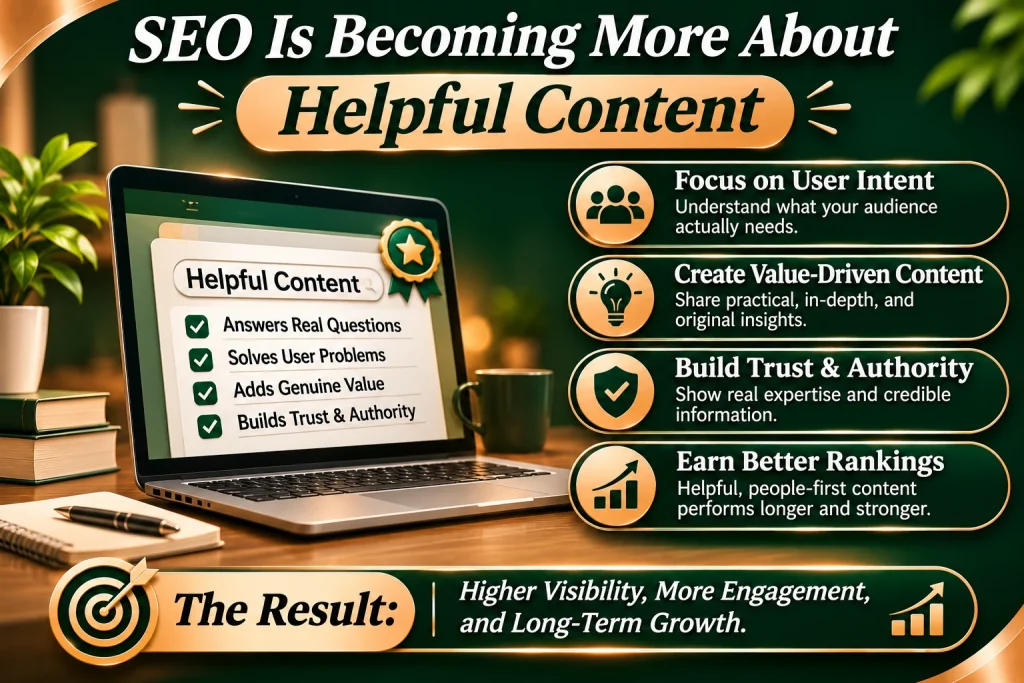
The way people search online continues to change.
Instead of typing a few words into a search engine, people are increasingly comfortable asking complete
questions using natural language.
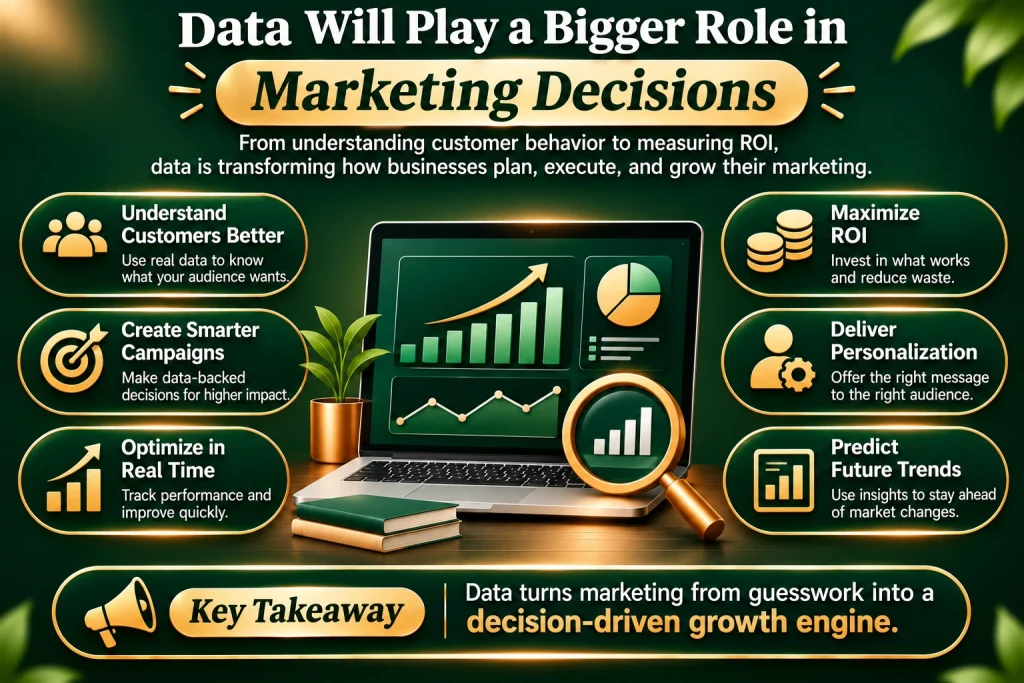
Good marketing is not just about creativity.
Website traffic, engagement, leads, conversions, advertising results, and customer behavior can provide
valuable information.
For example, suppose an advertisement is getting plenty of clicks but very few enquiries. Instead of
immediately spending more money on the campaign, a business can look at the landing page and
customer journey to understand where people are dropping off.
Using data in this way can help businesses make more informed decisions and avoid wasting their
marketing budget.
Customers are becoming more aware of how companies collect and use their personal information.
Because of this, businesses need to be more careful and transparent with customer data.
First-party data—information that customers willingly provide directly to a business—can become
particularly valuable.
This can include information collected through website forms, newsletters, customer accounts, surveys, or
direct interactions.
Building trust should be part of the marketing strategy, not something businesses think about later.
Influencer marketing is no longer only about celebrities with huge follower counts.
Smaller creators can have highly engaged audiences that are closely connected to a particular niche, city,
industry, or interest.
For businesses, this can create opportunities to reach a more specific audience.
The important question is not simply how many followers a creator has. Businesses should also consider
whether the creator’s audience matches their target customers and whether the content feels authentic.
A good partnership should make sense for both the brand and the creator’s audience.
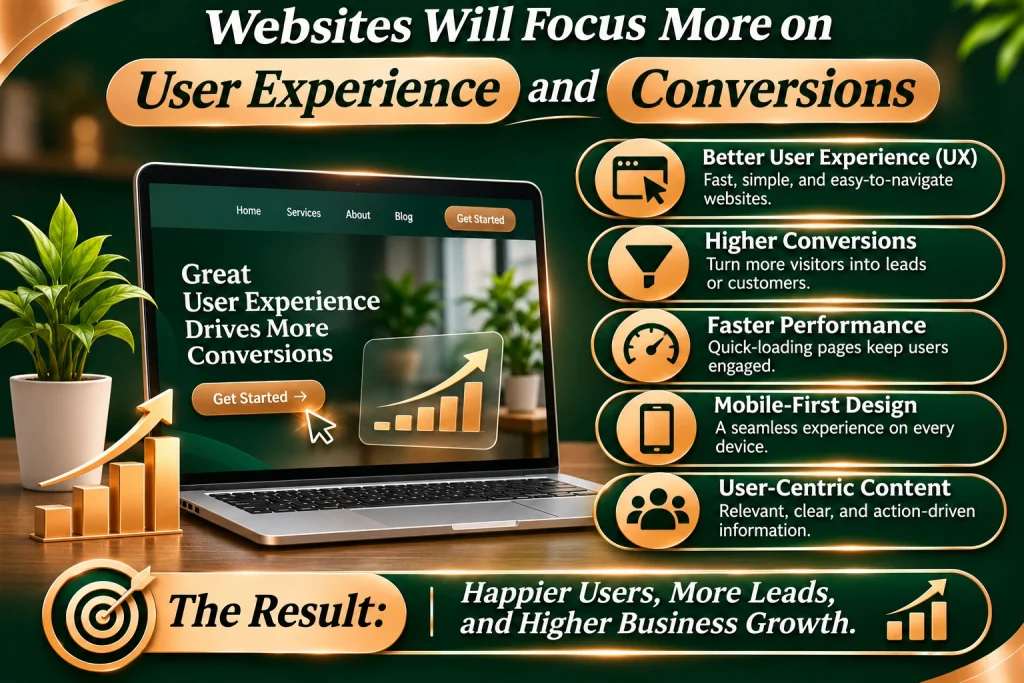
Your website is often the first serious interaction a potential customer has with your business.
If the website is slow, confusing, difficult to use on mobile, or unclear about what the business offers,
visitors may simply leave.
A modern business website should make things easy.
Visitors should quickly understand:
What your business does
What products or services you offer
Why they should choose you
How they can contact you
What they should do next
What Do These Trends Mean for Businesses
The biggest lesson from these trends is that digital marketing is becoming more customer-focused.
Technology is changing quickly, but the basic idea of good marketing has not changed: understand your
audience, provide something useful, communicate clearly, and build trust.
You also do not need to start using every trend immediately.
If SEO is already bringing traffic to your website, you may want to improve your content first. If your
audience spends most of its time on social media, short-form video may deserve more attention. If you are
running paid campaigns, data and conversion optimization may be more important.
How a Digital Marketing Agency Can Help
Keeping track of SEO, social media, paid advertising, content, analytics, websites, and new technology can
be difficult when you are also trying to run your business.
A digital marketing agency can help you bring these different pieces together.
From improving your website and search visibility to creating content, managing social media, and running
paid campaigns, the right marketing strategy can help your business build a stronger online presence.
The focus should not simply be on getting more clicks or followers. The goal is to turn online attention into
meaningful business results.
Ready to Grow Your Business Online
Your customers are already searching, scrolling, watching, and comparing businesses online.
The question is whether they are finding your business when they are ready to make a decision.
Our digital marketing team can help you build a strategy around your actual business goals—from SEO and
social media to paid advertising, content marketing, and website optimization.
Want to get more visibility, leads, and customers online?
[Get Your Free Digital Marketing Consultation →]
Let’s discuss your goals and find practical ways to strengthen your online presence.
Frequently Asked Questions
Someof the major areas to watch include AI-powered marketing, changing SEO and search behavior, shortform video, personalization, data-driven marketing, privacy, creator marketing, and conversion-focused
websites.
Yes. SEO continues to be an important way for businesses to reach people who are actively searching for
information, products, and services. However, businesses should focus on useful, relevant content instead
of relying only on keywords.
Yes, but businesses should focus on engagement and relationships rather than only chasing follower
numbers. Useful content and genuine conversations can help build a stronger audience.
AI can help with tasks such as content research, idea generation, data analysis, automation, customer
support, and campaign optimization. Human creativity and strategy are still important for making
marketing feel authentic.
No. A trend is only useful when it makes sense for your audience and business objectives. It is usually better
to focus on a few relevant strategies and execute them well than to try everything at once.