
Instagram Reels vs YouTube Shorts
Instagram Reels vs YouTube Shorts: Understanding the Difference
Let’s be completely honest for a second. Short-form video has completely taken over our lives. Whether you are scrolling through clips while waiting for your morning coffee or swiping through videos right before bed, micro-content is how we consume information now.
If you run a business, you already know you need to be making these videos. But once you sit down to actually create a strategy, you run straight into a massive dilemma: Should you put your energy into Instagram Reels or YouTube Shorts?
At first glance, they look exactly the same. They are both vertical videos, they both run under a minute, and they both rely on fast-paced, engaging hooks to keep people watching.
But beneath the surface, these two platforms are completely different beasts. They serve different audiences, use different algorithms, and drive entirely different types of business results.
Let’s pull back the curtain and break down the real differences between Instagram Reels and YouTube Shorts, so you can stop guessing and start investing your time where it actually moves the needle.
The Core Vibe: Community Culture vs. Search Value
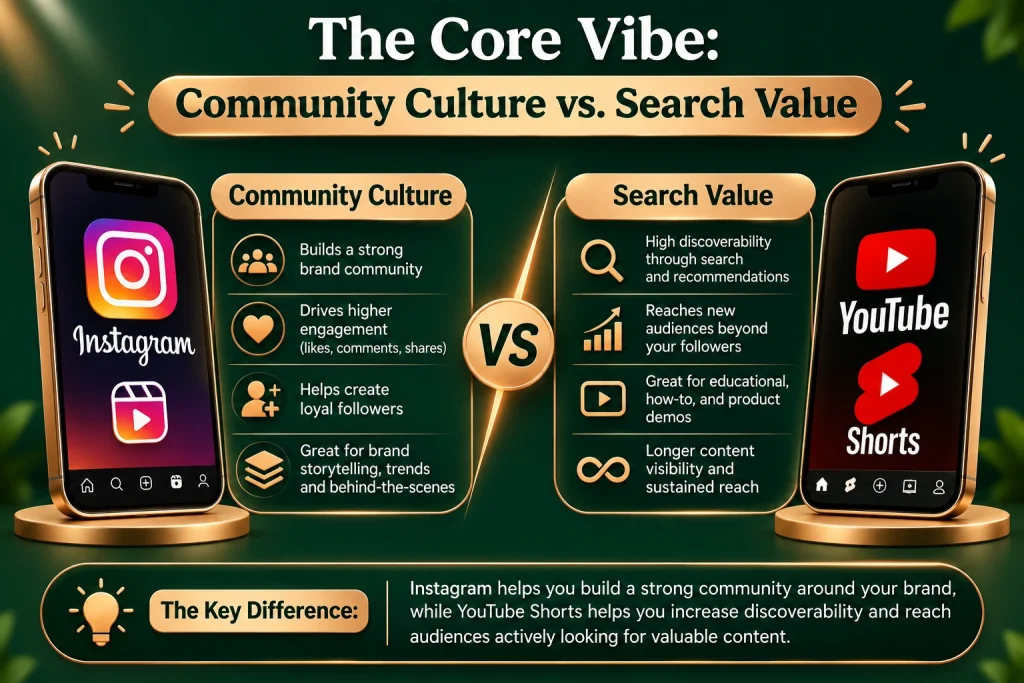
The biggest mistake business owners make is treating these two apps like identical twins. They aren’t. They have completely different DNAs.
nstagram is, and always has been, a lifestyle and relationship platform. People open Instagram to see what their friends are doing, discover aesthetics, and connect with brands on a personal level. Reels thrive on trend culture, beautiful visuals, relatable humor, and emotional storytelling. When someone watches a Reel, they are looking for inspiration, connection, or a quick laugh.
YouTube is the second largest search engine in the world. People don’t go to YouTube to check in on their high school friends; they go there to learn how to do something, find entertainment, or solve a problem. Shorts reflect this search-heavy culture. They are highly educational, information-dense, and utilitarian. A viewer on Shorts wants you to get straight to the point and deliver the answer they typed into the search bar.
The way your videos get distributed to strangers works very differently on each platform. Understanding this keeps you from losing your mind when a video performs well on one app but flops on the other.
Instagram prioritizes immediate engagement and shareability. It looks closely at how quickly people like your video, how many friends they send it to via direct message, and whether they save it for later. Instagram relies heavily on trending audio tracks and cultural challenges to push your video into the feed of non-followers. If your content doesn’t hit a strong initial wave of interaction within the first few hours, the algorithm usually stops pushing it.
YouTube cares almost entirely about viewer satisfaction, specifically Average Percentage Viewed (Retention). YouTube wants to see if a viewer stayed for the whole 30 seconds or swiped away instantly. If your retention rate is high, YouTube will throw your video into the massive “Shorts Feed” repeatedly. Furthermore, YouTube indexes your video based on keywords in your title, description, and automated transcripts, allowing it to surface in search results months after you post it.
Instagram makes it incredibly easy for a user to see a product in a Reel, tap a product tag, view the price, and check out without ever leaving the app. If you sell physical products, fashion, home decor, or lifestyle services, Reels offer a seamless bridge from attention to transaction. Furthermore, because Instagram has a native, deeply integrated messaging system, users can easily slide into your DMs to ask questions, allowing your sales team to close deals through real, direct conversations.
Your time is valuable. When you create a piece of content, you want it to work for your business for as long as possible. The longevity of your video assets varies wildly between these two ecosystems.
• Instagram Reels have a short, explosive shelf-life. A typical Reel gets the vast majority of its views within the first 48 to 72 hours. Once it drops out of the main algorithmic feed, it mostly sits on your profile grid. Unless it goes completely viral and triggers massive sharing loop, it rarely gets new organic traffic weeks down the line. You have to keep feeding the machine to stay relevant.
• YouTube Shorts have an evergreen shelf-life. Because Shorts are fundamentally tied to a search engine, a video you post today can suddenly start gaining thousands of views six months from now if someone types a matching question into Google or YouTube. Your content acts like an asset that accumulates value over time, driving fresh leads long after the camera was turned off.
Audience Demographics and Psychological Mindsets
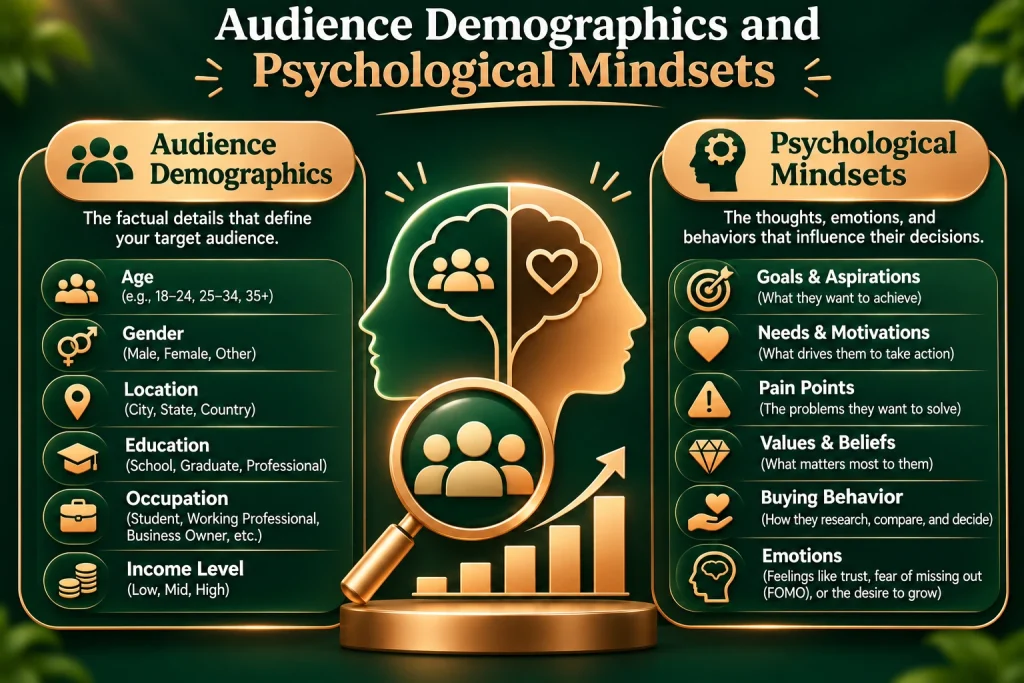
Who is watching, and what are they expecting when they open these apps? If you ignore the mindset of the scroller, your engagement rates will suffer.
The Instagram Mindset: Passive Scrolling and Aspiration
Users on Instagram are often in a casual, passive state of browsing. They are influenced by visual aesthetics, lifestyle upgrades, and social status. They follow specific creators because they like who they are, not just what they teach. To win on Reels, your brand needs a distinct personality, polished formatting, and an approachable voice.The YouTube Mindset: Intent-Driven Learning
YouTube users are inherently active consumers. They open the app with a specific intent—to solve an issue, watch a favorite creator’s show, or research a product purchase. Even when they wander into the Shorts feed, they maintain a hunger for substantive data. They don’t care about your flawless aesthetics or aesthetic filter; they care if you can teach them a neat trick, bust a myth, or provide a valuable shortcut in 30 seconds flat.
The Cross-Posting Trap: Why “Copy-Paste” Fails
Many busy business owners think they can save time by filming one video, downloading it from Instagram, and throwing it straight onto YouTube Shorts. This is a massive trap that actively kills your organic reach.
• The Watermark Kiss of Death: If you download a video directly from Instagram Reels and upload it to YouTube with the floating Instagram logo visible, the YouTube algorithm will aggressively suppress your reach. Competitor branding is an immediate red flag for the platform. Always upload the raw, unedited master file from your phone’s gallery.
• Caption and Title Disconnect: Instagram captions can be long, story-driven, and packed with emojis and conversational context. YouTube Shorts rely heavily on short, punchy, keyword-optimized titles (under 60 characters) because that is what catches a searcher’s eye.
• Audio Track Licensing: A trending pop song that helps your video blow up on Instagram might trigger a copyright claim or a complete mute on YouTube. If you are aiming for YouTube Shorts, it is far safer to rely on your original voiceover track and add a background beat using YouTube’s native audio library during production.
Where Should Your Business Focus?
You don’t need to burn yourself out trying to master every single platform from day one. Look at your business model, assess your available bandwidth, and pick the platform that matches your goals.
Double down on Instagram Reels if:
• You sell visual products, clothing, food, physical goods, or lifestyle experiences.
• Your brand relies heavily on visual aesthetic appeal and trend-driven marketing.
• You want to build a tight-knit, interactive community that actively talks to you via comments and direct messages.
• You have the bandwidth to post frequently to match the fast-decaying nature of the feed
A Realistic Content Workflow for Solo Creators
If you are running a business by yourself, managing both platforms can feel like a full-time job. Use this simple, streamlined production cycle to extract maximum value with minimal friction:
1. Script for YouTube Search First: Identify three highly searched customer questions. Write a fast, 40-second talking-head script for each one. Make sure the hook states the answer immediately to satisfy the search intent.
2. Shoot Raw Content: Set up your phone on a tripod in a brightly lit room. Shoot all three videos back-to-back using the native camera app. Do not use built-in social filters.
3. Edit the Master File: Drop your footage into a free editor like CapCut. Cut out every single “um,” pause, or breath. Add clear, fast-moving captions on the center of the screen since up to 85% of users watch short videos muted.
4. Publish Separately: Upload the clean master file to YouTube Shorts with a keyword-optimized title. Then, take the exact same clean file, upload it to Instagram Reels, select a trending audio track from the Instagram library, turn the track volume down to 3%, and write an engaging, conversational caption.
Frequently Asked Questions

Yes, you can absolutely reuse your video content, but you must remove the platform watermarks first. Posting a video on YouTube with a visible Instagram logo hurts its reach because the algorithm suppresses competitor branding. Keep the raw video file and upload it to each app separately.
YouTube Shorts generally offers a more predictable path to initial visibility for brand-new accounts. Because YouTube has a massive built-in audience actively looking for content, its algorithm is incredibly efficient at finding an initial testing pool of viewers for your Short, even if you have zero subscribers. Instagram tends to favor accounts that already have an established baseline of follower engagement.
Not at all. While trending music is a massive growth driver on Instagram Reels, it isn’t as critical on YouTube Shorts. On YouTube, clear audio, a strong vocal delivery, and valuable information matter far more than using the latest viral audio track.
For both platforms, the sweet spot sits between 15 to 45 seconds. The most important rule is to cut the fluff. If you can deliver your point clearly in 20 seconds, do not drag it out to 60 seconds just to fill the time. Pacing is everything.
No, especially not on YouTube Shorts. The Shorts algorithm can sometimes take days, or even weeks, to properly analyze your video’s metadata and find the right test audience. Deleting and reposting constantly can confuse the algorithm and make your account look spammy. Leave it up and move on to your next piece.