
Social Media Marketing Strategy for Small Businesses
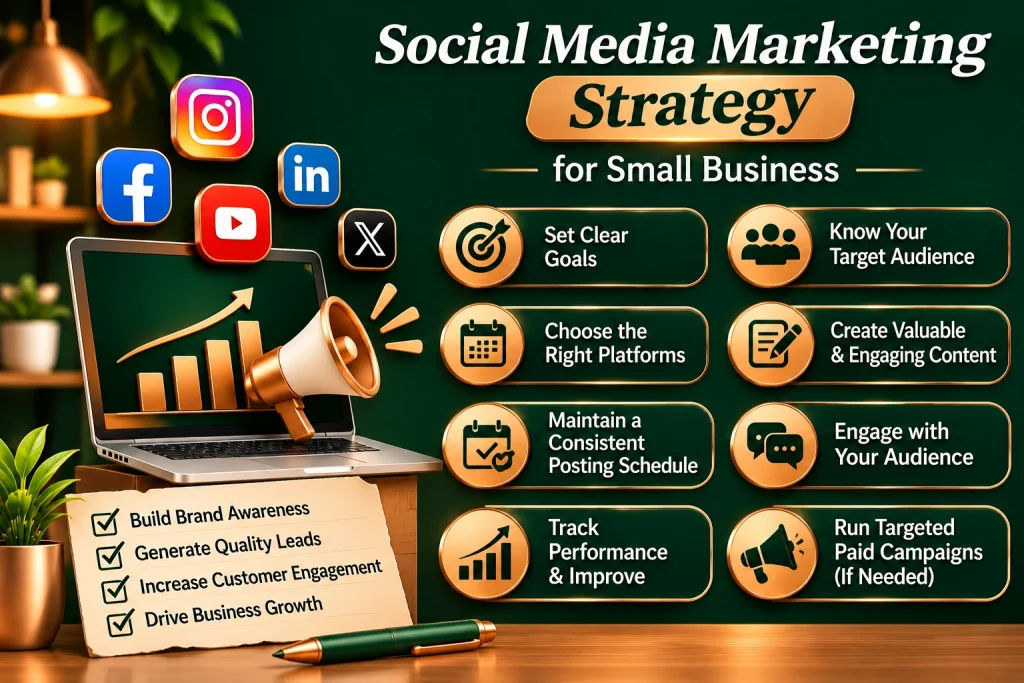
If you run a small business, you have probably noticed how much time people spend on social media. Customers are discovering new brands on Instagram, asking questions on Facebook, watching videos on YouTube, and even researching businesses before deciding whether to buy from them.
That makes social media a best opportunity for small businesses.
The good news is that you don’t need a huge marketing budget or millions of followers to make social media work. What you really need is a clear strategy, useful content, consistency, and a good understanding of the people you want to reach.
But there is one common mistake businesses make: they treat social media as simply a place to post something every day.
Posting regularly is helpful, but it isn’t the whole strategy
A successful social media presence is about creating content that people actually want to see, starting conversations, building trust, and eventually turning interested followers into customers.
In this guide, we’ll look at how you can create a practical social media marketing strategy for your small business and use it to build a stronger online presence.
What Is Social Media Marketing?
In simple terms, social media marketing means using platforms such as Instagram, Facebook, LinkedIn, and YouTube to promote your business and connect with your audience.
It can involve many different activities, including:
Sharing useful content
Posting photos and videos
Answering customer questions
Promoting products or services
Running paid advertisements
Sharing customer reviews
Driving traffic to your website
Generating leads
Building a community around your brand
The important thing to remember is that social media shouldn’t be treated as just another advertising channel.
People want to connect with real businesses and real people. That’s why helpful, relatable, and genuine content often has a much better chance of getting attention than constant promotional posts.
Why Social Media Marketing Is Important for Small Businesses
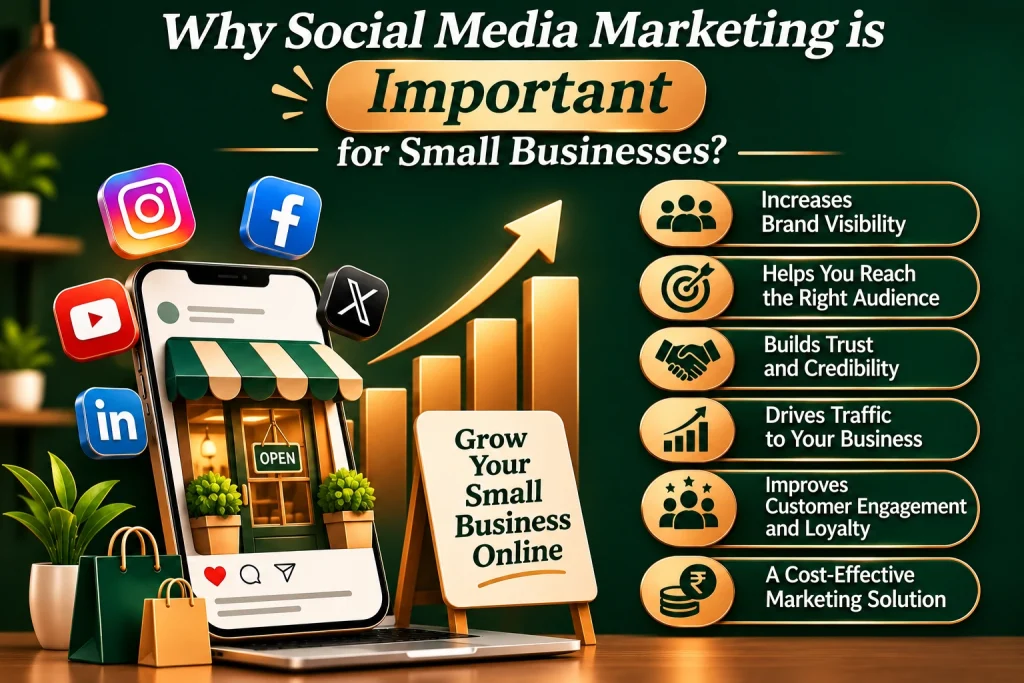
Large companies often have dedicated marketing teams and big advertising budgets. Small businesses usually don’t have the same resources.
Social media can give smaller businesses a way to compete for attention without needing a massive budget.
1. It Helps People Discover Your Business
Before becomes your customer, they need to know your business exists.
Regularly sharing useful content can put your business in front of potential customers and help them become familiar with your brand.
Over time, that familiarity can make a difference when they’re ready to buy.
2. You Can Talk Directly to Customers
One of the best things about social media is that communication goes both ways.
A customer can comment on your post, send you a message, ask a question, or share feedback.
You can respond directly instead of relying only on traditional advertising.
For a small business, that personal interaction can be extremely valuable.
3. It Can Bring More Traffic and Leads
Social media can also send people to your website.
For example, you could publish a helpful post about a problem your customers face and link it to a detailed article on your website.
You can also use social media campaigns to encourage people to request a quote, book a consultation, fill out a form, or contact your business
4. It Helps Build Trust
People are more suitable buying from businesses they understand and trust.
Social media gives you a chance to show the people and process behind your business.
You can share customer feedback, introduce your team, show behind-the-scenes moments, answer common questions, and explain how your products or services work.
These small things can make your business feel more genuine
How to Create a Social Media Marketing master plan for Your Small Business
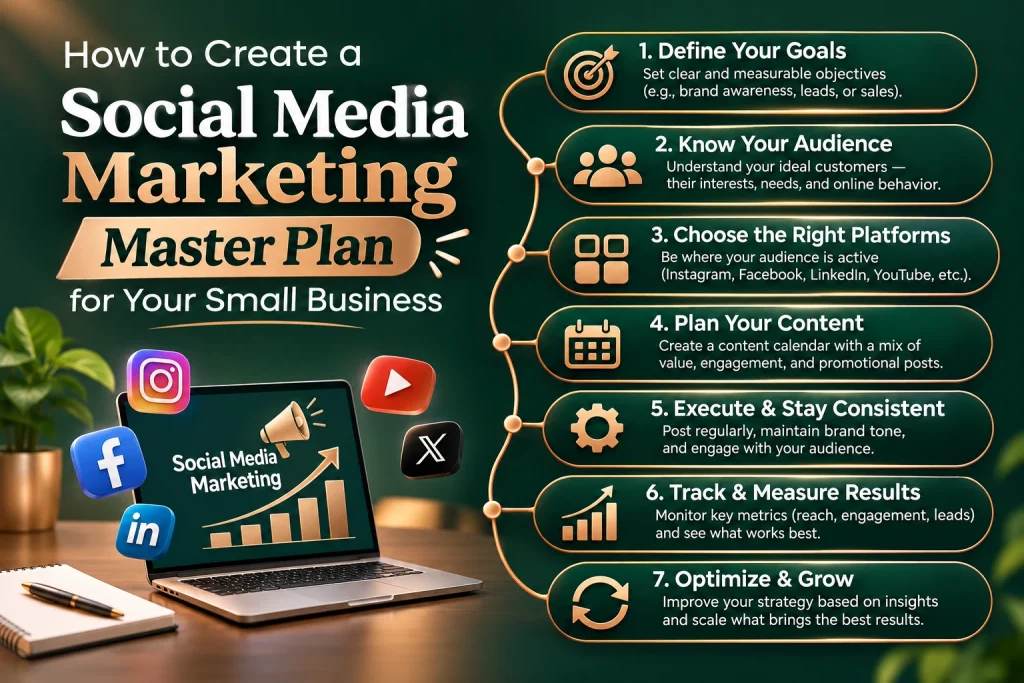
You don’t need a risky marketing plan to get started.
A simple strategy can work surprisingly well if you follow it consistently and keep improving it.
1. Start With a Clear Goal
Before you create your first post, ask yourself:
Let’s be honest: what am I actually trying to get out of social media for my business?”
Your answer might be:
Get more customers
Generate leads
Increase website traffic
Build brand awareness
Promote a new product
Increase online sales
Build a community
Get more inquiries
For example, saying “I want more followers” isn’t necessarily a strong business goal.
Instead, you might say:
Now you have something you can actually measure
2. Know Who You’re Talking To
Think about your ideal customer.
Ask yourself:
Who are they?
What problems do they have?
What are they interested in?
Where do they live?
What kind of content do they enjoy?
What questions do they usually ask?
What might stop them from buying?
For example, a local restaurant and a B2B software company shouldn’t use the same social media strategy.
Understanding your audience helps you create content that feels relevant instead of generic.
3. Choose the Right Social Media Platforms
You don’t have to create an account on every social media platform.
In fact, trying to manage too many platforms at once can make your content inconsistent.
Start with the platforms where your customers are most likely to spend their time.
Instagram
Instagram can be a strong choice for businesses that can use images and videos to showcase their products, services, people, or work.
Reels, Stories, carousels, and other visual content can all be useful.
Facebook can be useful for local businesses, communities, customer communication, and advertising.
It can also be helpful for businesses that want to build a local audience.
If you run a B2B company, consultancy, agency, or professional service business, LinkedIn can be particularly useful.
It allows you to share industry knowledge, company updates, case studies, and professional insights.
YouTube
YouTube is worth considering if your business can create educational or longer-form videos.
Tutorials, product demonstrations, reviews, interviews, and how-to videos can continue attracting viewers long after they are published.
The key is simple:
Don’t try to be everywhere. Be consistent where your audience actually is.
4. Don’t Make Every Post an Advertisement
This is one of the biggest social media mistakes businesses make.
Imagine following a business account and seeing:
“BUY NOW!”
“LIMITED OFFER!”
“CONTACT US TODAY!”
“GET 20% OFF!”
on almost every post.
After a while, people are likely to stop paying attention.
Instead, create a mixture of content.
Eduational Content
Help your audience solve a problem.
For example:
Tips
Tutorials
Industry advice
Common mistakes
How-to posts
Frequently asked questions
Entertaining Content
Not every post needs to teach something serious.
Depending on your brand, you can use humor, interesting stories, trends, or relatable content.
Promotional Content
Of course, you should promote your products and services.
Just make sure promotional posts are part of a wider content strategy.
Behind-the-Scenes Content
Show the human side of your business.
You sould introduce your team, show your workspace, explain how something is made, or share what happens during a normal day at your company.
Customer Content
Customer reviews, testimonials, case studies, and user-generated content can help potential customers understand what it’s actually like to work with or buy from your business.
5 Make Your Captions More Conversational
Your social media captions don’t need to sound like a corporate brochure.
Write the way you would actually speak to a customer
Instead of:
We help your business get noticed online by putting your brand right where your customers are looking.”
“Not getting enough customers from your website? Let’s look at what’s stopping people from finding and contacting your business.”
it’s way more direct and easy to get.”
And don’t forget your CTA.
Depending on the post, you could ask people to:
Comment their opinion
Save the post
Share it
Visit your website
Send you a message
Book a consultation
Download a guide
Give people a clear next step.
Actually Talk to Your Audience
“Social media isn’t a megaphone; it’s a two-way street.”
If someone comments on your post, respond.
If someone asks a question, answer it.
If someone sends you a message about your service, don’t leave them waiting unnecessarily.
You can also create conversations by asking questions, running polls, requesting opinions, or encouraging people to share their experiences.
These interactions can help you understand your audience better while making your brand feel more approachable.
8. Consider Paid Social Media Advertising
Organic content is useful, but sometimes you need an extra push to reach the right people.
That’s where paid social media advertising comes in.
Platforms such as Meta allow businesses to create campaigns designed around different objectives and audiences.
You can test different:
Audiences
Videos
Images
Offers
Headlines
Landing pages
Campaign objectives
You don’t necessarily need to start with a huge budget.
Start small, track the results, and learn what works before increasing your spending.
Most importantly, don’t judge an advertisement only by likes.
If your goal is leads, look at leads.
If your goal is sales, look at sales.
The numbers that matter are the ones connected to your actual business objective
9. Track What Is Working
One of the biggest advantages of digital marketing is that you can measure your results.
Depending on your goals, you can track:
Reach
Impressions
Engagement
Video views
Profile visits
Website clicks
Leads
Conversions
Cost per lead
Sales
For example, a post with 10,000 views might look impressive.
But if another post with only 2,000 views brings you five customers, the second post may be more valuable to your business.
That’s why it’s important to look beyond vanity metrics and understand how social media is contributing to your actual goals.
10. Avoid These Common Social Media Mistakes
Even a well-planned strategy can fail if you make a few basic mistakes.
Posting Randomly
If you don’t know why you’re posting something, your audience probably won’t know either.
Chasing Followers
More followers don’t automatically mean more customers.
A smaller audience that genuinely needs your product can be more useful than a huge audience that has no interest in what you sell.
Only Talking About Your Business
Your audience doesn’t want to hear about your business in every single post.
Talk about their problems, questions, interests, and goals too.
Ignoring Messages
A potential customer who takes the time to message your business deserves a response.
Expecting Overnight Results
Social media is rarely a magic switch that suddenly brings hundreds of customers.
It takes testing, consistency, learning, and improvement.
Final Thoughts
Building a social media presence for a small business doesn’t have to be complicated.
You don’t need to post constantly, chase every trend, or spend a fortune on advertising.
Start by understanding your customers. Choose the platforms that make sense for your business. Create content that helps or interests people. Talk to your audience instead of simply selling to them. And most importantly, pay attention to your results.
A good social media marketing strategy for small businesses is not about getting attention for a few days. It’s about gradually building awareness, trust, relationships, and opportunities for your business.
Social media will continue to change, but one thing is unlikely to change: people respond to content that feels useful, relevant, and genuine.
So start small, stay consistent, learn from your audience, and keep improving.
Frequently Asked Questions

1. What is the best social media platform for a small business?
There is not one platform that works best for every business. Your ideal platform depends on your target audience, industry, content, and goals. Instagram, Facebook, LinkedIn, and YouTube can all be useful in different situations.
2. How often should a small business actually post on social media?
The truth is, there’s no magic number that works for every single business. The best approach is to start with a realistic schedule you can actually stick to long-term. Posting three or four genuinely helpful things every week is much better than burning yourself out by posting every day for two weeks and then disappearing completely. Consistency is what keeps you top-of-mind.
3. Can social media really help a small business land actual customers?
Absolutely. When done right, social media is incredibly effective for introducing your brand to new people, building real trust, sparking inquiries, and driving high-quality traffic to your website to boost sales. Just keep in mind that your results will largely depend on how well you know your audience, the quality of your content, and the strategy behind your execution.
4. Should small businesses spend money on social media ads?
Paid advertising is definitely worth it, but only if you have a crystal-clear goal and a highly defined target audience. Don’t dive in headfirst. Start with a small, manageable budget that you are comfortable losing, test out different types of creatives, and closely measure the results before you decide to scale up your spending.
5. How long does it take to start seeing real results?
It really depends on what you are trying to achieve. If you run a targeted paid campaign, you might see new leads roll in relatively quickly. However, building genuine brand awareness and a loyal, engaged community organically is a marathon, not a sprint. The key is staying consistent, analyzing what works, and constantly tweaking you