
How Retargeting Ads Work And Why Your Business Needs Them
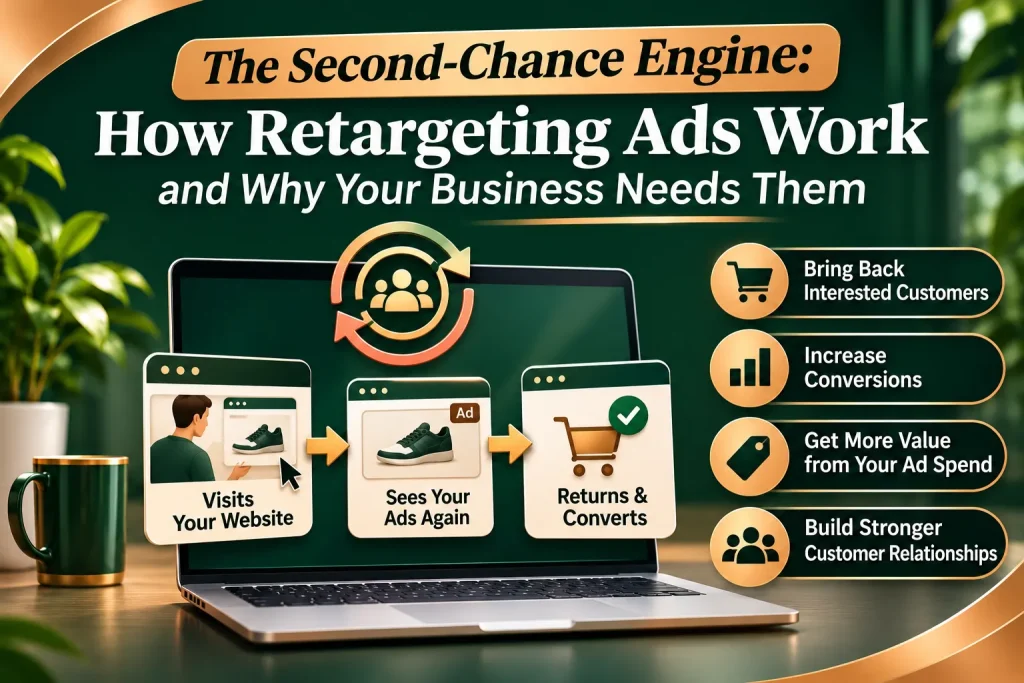
The Second-Chance Engine: How Retargeting Ads Work and Why Your Business Needs Them
Have you ever browsed an online store, looked at a cool pair of sneakers or a software tool, and then closed the tab without buying anything?
A few hours later, you’re scrolling through your favorite news site or checking your social media feed, and boom—there are those exact same sneakers, looking right back at you.
It feels like digital mind-reading or a weird coincidence, but it isn’t. It’s a marketing strategy called retargeting (sometimes called remarketing), and it is easily one of the smartest ways to grow a business online today.
Let’s face it: catching a customer’s attention once is hard enough. Holding onto it long enough to get them to buy something is even harder. In this guide, we are going to pull back the curtain on how retargeting ads actually work, why your business is losing money without them, and how you can use them to turn casual window shoppers into paying customers.
The Hard Truth About Online Shopping: The "One-and-Done" Problem
To understand why retargeting matters, we have to look at a pretty brutal reality of the digital world: the average website conversion rate is only about 2% to 3%.
Think about that for a second. Out of every 100 people who click your links, read your posts, or check out your products, 97 or 98 of them leave without doing a single thing. They don’t buy, they don’t sign up for your newsletter, and they don’t fill out a contact form.
Why do they walk away? It’s usually not because they hate your brand. Life just gets in the way:
• They got a text message or a phone call and closed the app.
• They were just researching and weren’t ready to spend money yet.
• They wanted to see if a competitor had a better price.
• They were on a bus and didn’t feel like pulling out their credit card.
If you don’t have a plan to bring these people back, they are gone forever. That is pure wasted ad spend and lost effort. Retargeting acts as a safety net, keeping your brand fresh in their minds even after they wander off.
How Retargeting Ads Work: Step-by-Step
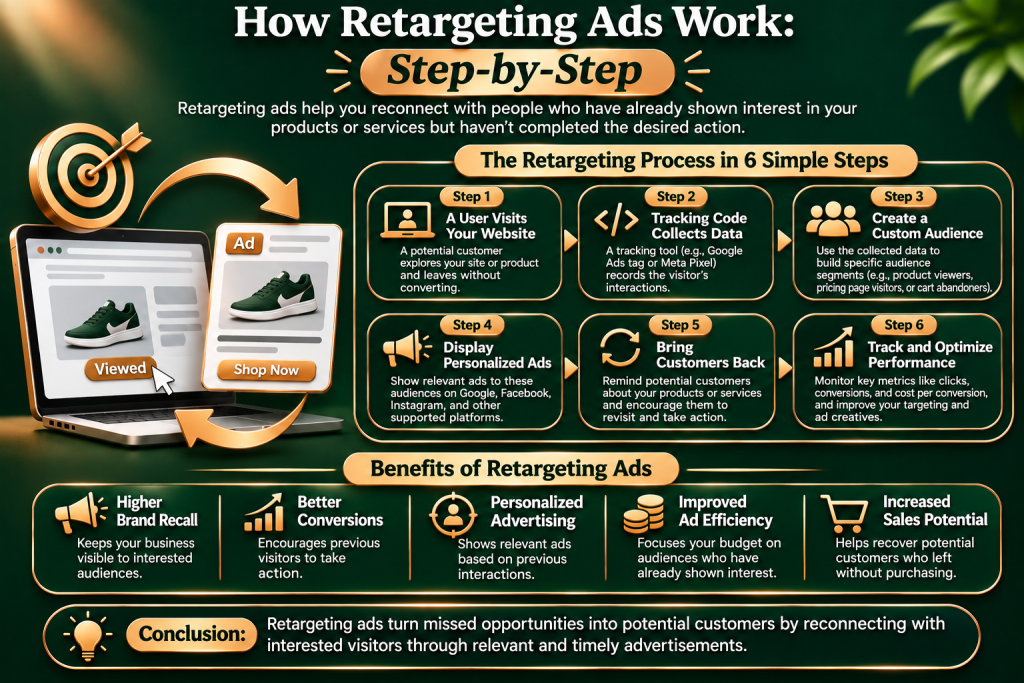
Strip away all the confusing tech-talk, and retargeting is actually pretty simple. It uses basic web tracking to anonymously follow your audience across the internet.
Here is exactly how a typical campaign plays out in real life:
When you set up an ad account with a platform like Google Ads or Meta (Facebook/Instagram), they give you a tiny, invisible piece of code called a pixel. You paste this code into your website’s background. It doesn’t slow your site down, and your everyday visitors won’t even know it’s there.
When someone lands on your website, that pixel drops a tiny, anonymous browser cookie or tracks their device ID. Think of it like putting a friendly digital sticky note on their jacket. This note tracks what they do—like which product they looked at or if they put an item in their cart.
The visitor leaves your website without buying anything. They move on with their day—maybe reading an online news article, checking their Instagram feed, or watching a video on YouTube.
The ad network recognizes that digital sticky note when the user visits other websites or apps within their network. The system instantly realizes, “Hey, this person looked at that specific jacket two hours ago!” and shows them your ad in an open banner or feed slot.
The user sees your ad, remembers how much they liked your product, clicks it, and goes straight back to your website to finish what they started.
Pixel-Based vs. List-Based Retargeting: What's the Difference?
While the pixel method we just talked about is the most common, you can also use list-based retargeting. Here is a quick breakdown of how they compare:
• Pixel-Based Retargeting: This happens automatically based on real-time behavior. It’s incredibly fast and perfect for catching someone right after they leave your site. The only downside is that it relies on browser cookies, which are getting heavily regulated these days.
• List-Based Retargeting: This uses information you already own. You upload a spreadsheet of customer emails or phone numbers into an ad platform (like Facebook Custom Audiences). The platform matches those emails to its users and shows them your ads. This is amazing for re-engaging old leads or selling new things to past buyers.
Why Your Business Absolutely Needs Retargeting
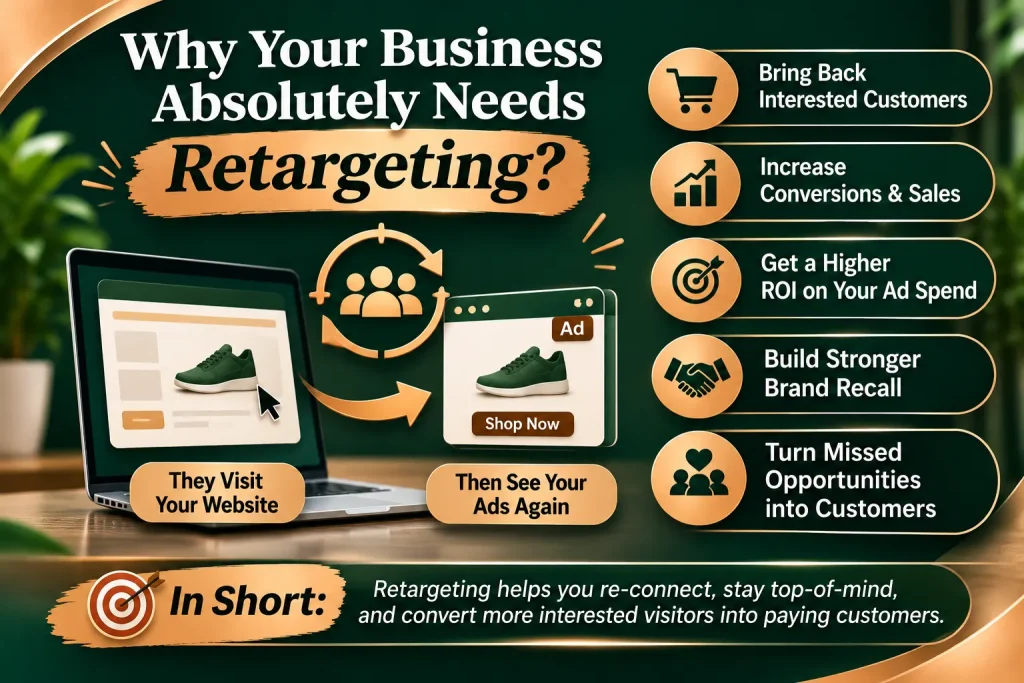
If you are putting all your time and budget into standard SEO, basic Google searches, or organic social media just to get new eyeballs, you are missing out on the easiest sales you could possibly make. Here is why retargeting is a game-changer.
1. You are Talking to Warm Leads
Traditional ads are like shouting at strangers on the street, hoping someone happens to need what you’re selling. Retargeting is talking to someone who already walked into your store, looked around, and liked what they saw. They already know who you are, so you don’t have to waste time introducing yourself.
2. Much Higher Conversion Rates
Because these people are already interested, retargeting ads convert at a much higher rate than regular ads. Most humans need to see a brand a few times before they trust it enough to hand over their credit card. Retargeting builds those touchpoints naturally.
3. It’s Way Cheaper
Competing for broad keywords on Google can cost a fortune. Retargeting narrows your budget down to a small, highly specific group of people who are already on the fence. Because the audience is smaller and more likely to click, your Cost Per Click (CPC) drops, giving you a much higher return on your investment.
4. It Makes Your Brand Look Huge
Even if people don’t click your retargeting ad right away, seeing your logo and products on major websites builds massive trust. Psychologically, it makes your business look established, professional, and everywhere at once.
5. It Rescues Abandoned Carts
For online shops, cart abandonment is a massive headache. People add items to a cart and just walk away. A smart retargeting ad showing the exact items they left behind—maybe paired with a free shipping code or a 10% discount—is often the exact push they need to come back and buy.
Conclusion: Stop Letting Warm Leads Walk Away
Every single day you run your business without a retargeting plan, you are letting interested buyers walk right out your virtual front door. You’ve already done the hard work and spent the money to get them to your site the first time—don’t just let them vanish.
By setting up a simple, thoughtful retargeting strategy, you can plug the leaks in your sales funnel and start generating way more revenue from the traffic you already have. It’s affordable, hyper-efficient, and it just plain works.
Frequently Asked Questions

Yes, it is completely legal, but you have to play by the modern rules. With regulations like GDPR, CCPA, and Apple’s iOS tracking updates, you just need to make sure your website has a clear privacy policy and a cookie consent banner that lets users opt out if they want to.
People use these terms interchangeabaly all the time, but they used to mean slightly different things. Retargeting usually refers to showing paid ads on browser networks and social media. Remarketing usually refers to reaching out via email (like sending an automated email when someone leaves an item in an online cart). Today, most marketers view them as two sides of the same coin.
The best part about retargeting is that it doesn’t require a huge budget. Because your audience pool is small (only people who visited your site), you don’t need to spend thousands. You can easily start a highly effective campaign on Facebook or Google for as little as $5 to $10 a day and scale it up as the profits come in.
It depends entirely on what you sell. If you sell inexpensive items like clothes or gadgets, keep your window short—around 7 to 14 days. If you sell expensive B2B software, real estate, or consulting services where people take months to make a decision, your window might need to be 30, 60, or even 90 days.