Soical Media Marketing

Soical Media Marketing, Uncategorized

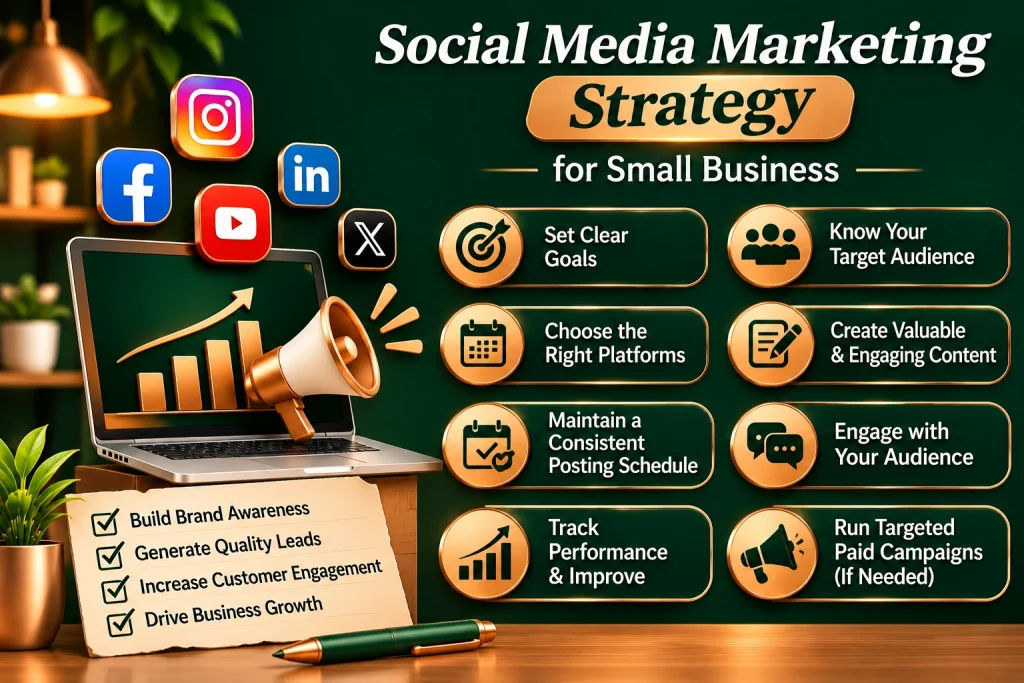
Social Media Marketing Strategy for Small Businesses

Social Media Marketing Strategy for Small Businesses If you run a small business, you have probably noticed how much time people spend on social media. Customers are discovering new brands on Instagram, asking questions on Facebook, watching videos on YouTube, and even researching businesses before deciding whether to buy from them. That makes social media a best opportunity for small businesses. The good news is that you don’t need a huge marketing budget or millions of followers to make social media work. What you really need is a clear strategy, useful content, consistency, and a good understanding of the people you want to reach. But there is one common mistake businesses make: they treat social media as simply a place to post something every day. Posting regularly is helpful, but it isn’t the whole strategy A successful social media presence is about creating content that people actually want to see, starting conversations, building trust, and eventually turning interested followers into customers. In this guide, we’ll look at how you can create a practical social media marketing strategy for your small business and use it to build a stronger online presence. What Is Social Media Marketing? In simple terms, social media marketing means using platforms such as Instagram, Facebook, LinkedIn, and YouTube to promote your business and connect with your audience. It can involve many different activities, including: Sharing useful content Posting photos and videos Answering customer questions Promoting products or services Running paid advertisements Sharing customer reviews Driving traffic to your website Generating leads Building a community around your brand The important thing to remember is that social media shouldn’t be treated as just another advertising channel. People want to connect with real businesses and real people. That’s why helpful, relatable, and genuine content often has a much better chance of getting attention than constant promotional posts. Why Social Media Marketing Is Important for Small Businesses Large companies often have dedicated marketing teams and big advertising budgets. Small businesses usually don’t have the same resources. Social media can give smaller businesses a way to compete for attention without needing a massive budget. 1. It Helps People Discover Your Business Before becomes your customer, they need to know your business exists. Regularly sharing useful content can put your business in front of potential customers and help them become familiar with your brand. Over time, that familiarity can make a difference when they’re ready to buy.  2. You Can Talk Directly to Customers One of the best things about social media is that communication goes both ways. A customer can comment on your post, send you a message, ask a question, or share feedback. You can respond directly instead of relying only on traditional advertising. For a small business, that personal interaction can be extremely valuable. 3. It Can Bring More Traffic and Leads Social media can also send people to your website. For example, you could publish a helpful post about a problem your customers face and link it to a detailed article on your website. You can also use social media campaigns to encourage people to request a quote, book a consultation, fill out a form, or contact your business 4. It Helps Build Trust People are more suitable buying from businesses they understand and trust. Social media gives you a chance to show the people and process behind your business. You can share customer feedback, introduce your team, show behind-the-scenes moments, answer common questions, and explain how your products or services work. These small things can make your business feel more genuine How to Create a Social Media Marketing master plan for Your Small Business You don’t need a risky marketing plan to get started. A simple strategy can work surprisingly well if you follow it consistently and keep improving it. 1. Start With a Clear Goal Before you create your first post, ask yourself: Let’s be honest: what am I actually trying to get out of social media for my business?” Your answer might be: Get more customers Generate leads Increase website traffic Build brand awareness Promote a new product Increase online sales Build a community Get more inquiries For example, saying “I want more followers” isn’t necessarily a strong business goal. Instead, you might say: Now you have something you can actually measure 2. Know Who You’re Talking To Think about your ideal customer. Ask yourself: Who are they? What problems do they have? What are they interested in? Where do they live? What kind of content do they enjoy? What questions do they usually ask? What might stop them from buying? For example, a local restaurant and a B2B software company shouldn’t use the same social media strategy. Understanding your audience helps you create content that feels relevant instead of generic. 3. Choose the Right Social Media Platforms You don’t have to create an account on every social media platform. In fact, trying to manage too many platforms at once can make your content inconsistent. Start with the platforms where your customers are most likely to spend their time. Instagram Instagram can be a strong choice for businesses that can use images and videos to showcase their products, services, people, or work. Reels, Stories, carousels, and other visual content can all be useful. Facebook Facebook can be useful for local businesses, communities, customer communication, and advertising. It can also be helpful for businesses that want to build a local audience. LinkedIn If you run a B2B company, consultancy, agency, or professional service business, LinkedIn can be particularly useful. It allows you to share industry knowledge, company updates, case studies, and professional insights.  YouTube YouTube is worth considering if your business can create educational or longer-form videos. Tutorials, product demonstrations, reviews, interviews, and how-to videos can continue attracting viewers long after they are published. The key is simple: Don’t try to be everywhere. Be consistent where your audience actually is. 4. Don’t Make Every Post an Advertisement This is one of the biggest social media mistakes
Soical Media Marketing

Instagram Reels vs YouTube Shorts

Instagram Reels vs YouTube Shorts Instagram Reels vs YouTube Shorts: Understanding the Difference Let’s be completely honest for a second. Short-form video has completely taken over our lives. Whether you are scrolling through clips while waiting for your morning coffee or swiping through videos right before bed, micro-content is how we consume information now.If you run a business, you already know you need to be making these videos. But once you sit down to actually create a strategy, you run straight into a massive dilemma: Should you put your energy into Instagram Reels or YouTube Shorts?At first glance, they look exactly the same. They are both vertical videos, they both run under a minute, and they both rely on fast-paced, engaging hooks to keep people watching.But beneath the surface, these two platforms are completely different beasts. They serve different audiences, use different algorithms, and drive entirely different types of business results.Let’s pull back the curtain and break down the real differences between Instagram Reels and YouTube Shorts, so you can stop guessing and start investing your time where it actually moves the needle. The Core Vibe: Community Culture vs. Search Value The biggest mistake business owners make is treating these two apps like identical twins. They aren’t. They have completely different DNAs. Instagram Reels: The Visual Magazine nstagram is, and always has been, a lifestyle and relationship platform. People open Instagram to see what their friends are doing, discover aesthetics, and connect with brands on a personal level. Reels thrive on trend culture, beautiful visuals, relatable humor, and emotional storytelling. When someone watches a Reel, they are looking for inspiration, connection, or a quick laugh. YouTube Shorts: The Micro-Search Engine YouTube is the second largest search engine in the world. People don’t go to YouTube to check in on their high school friends; they go there to learn how to do something, find entertainment, or solve a problem. Shorts reflect this search-heavy culture. They are highly educational, information-dense, and utilitarian. A viewer on Shorts wants you to get straight to the point and deliver the answer they typed into the search bar. How the Algorithms Choose Winners The way your videos get distributed to strangers works very differently on each platform. Understanding this keeps you from losing your mind when a video performs well on one app but flops on the other. The Reels Algorithm: Viral Velocity and Shares Instagram prioritizes immediate engagement and shareability. It looks closely at how quickly people like your video, how many friends they send it to via direct message, and whether they save it for later. Instagram relies heavily on trending audio tracks and cultural challenges to push your video into the feed of non-followers. If your content doesn’t hit a strong initial wave of interaction within the first few hours, the algorithm usually stops pushing it. The Shorts Algorithm: Viewer Retention and Search Intent YouTube cares almost entirely about viewer satisfaction, specifically Average Percentage Viewed (Retention). YouTube wants to see if a viewer stayed for the whole 30 seconds or swiped away instantly. If your retention rate is high, YouTube will throw your video into the massive “Shorts Feed” repeatedly. Furthermore, YouTube indexes your video based on keywords in your title, description, and automated transcripts, allowing it to surface in search results months after you post it. Reels are Built for Smooth Social Commerce Instagram makes it incredibly easy for a user to see a product in a Reel, tap a product tag, view the price, and check out without ever leaving the app. If you sell physical products, fashion, home decor, or lifestyle services, Reels offer a seamless bridge from attention to transaction. Furthermore, because Instagram has a native, deeply integrated messaging system, users can easily slide into your DMs to ask questions, allowing your sales team to close deals through real, direct conversations. Shelf-Life: How Long Do Your Videos Stay Alive? Your time is valuable. When you create a piece of content, you want it to work for your business for as long as possible. The longevity of your video assets varies wildly between these two ecosystems.• Instagram Reels have a short, explosive shelf-life. A typical Reel gets the vast majority of its views within the first 48 to 72 hours. Once it drops out of the main algorithmic feed, it mostly sits on your profile grid. Unless it goes completely viral and triggers massive sharing loop, it rarely gets new organic traffic weeks down the line. You have to keep feeding the machine to stay relevant.• YouTube Shorts have an evergreen shelf-life. Because Shorts are fundamentally tied to a search engine, a video you post today can suddenly start gaining thousands of views six months from now if someone types a matching question into Google or YouTube. Your content acts like an asset that accumulates value over time, driving fresh leads long after the camera was turned off. Audience Demographics and Psychological Mindsets Who is watching, and what are they expecting when they open these apps? If you ignore the mindset of the scroller, your engagement rates will suffer. The Instagram Mindset: Passive Scrolling and AspirationUsers on Instagram are often in a casual, passive state of browsing. They are influenced by visual aesthetics, lifestyle upgrades, and social status. They follow specific creators because they like who they are, not just what they teach. To win on Reels, your brand needs a distinct personality, polished formatting, and an approachable voice.The YouTube Mindset: Intent-Driven Learning YouTube users are inherently active consumers. They open the app with a specific intent—to solve an issue, watch a favorite creator’s show, or research a product purchase. Even when they wander into the Shorts feed, they maintain a hunger for substantive data. They don’t care about your flawless aesthetics or aesthetic filter; they care if you can teach them a neat trick, bust a myth, or provide a valuable shortcut in 30 seconds flat.  The Cross-Posting Trap: Why “Copy-Paste” FailsMany busy business owners think they can

Soical Media Marketing

How to Increase Engagement on Social Media

How to Increase Engagement on Social Media How to Increase Engagement on Social Media Let’s be completely honest for a second. There is nothing more frustrating than spending hours filming a video, designing a graphic, or writing a thoughtful caption, only to hit “publish” and hear absolute crickets.You check your phone an hour later. Two likes. One is from your mom, and the other is from a random bot account trying to sell you followers. It makes you want to throw your hands up and give up on social media entirely.But here is the hard truth you need to hear: Engagement isn’t something you get just because you posted. Engagement is something you earn.If your audience is just scrolling right past your content without hitting like, leaving a comment, or saving it for later, it’s not because the algorithm hates you. It is because your content isn’t giving them a reason to stop.Let’s strip away the corporate jargon and look at the real, human strategies you can use today to spike your social media engagement, build a loyal community, and turn random scrollers into paying clients. The Golden Rule: Stop Talking AT Your Audience aNobody likes being talked at. Social media is supposed to be a real conversation, not a one-sided speech.Think about the last time you were at a party and met someone who only talked about themselves, their achievements, and their products. You probably looked for the fastest excuse to walk away.Many businesses treat their profiles exactly like that annoying party guest. Every single post is: “Buy our product,” “Look at our award,” “Here is our office.” If you want people to talk to you, you have to talk with your audience, not just to them. Ask Real Questions Instead of writing a long caption and ending it with a lazy “What do you think?”, ask specific, deep questions.When someone takes 10 seconds out of their busy day to leave a comment on your post, that is a huge win. Reward them. Reply with a thoughtful sentence, not just a generic thumbs-up emoji. The 20-Minute Engagement Tax You cannot expect people to engage with your content if you act like a ghost who only drops a post and logs off. Social media networks want users to stay on their platforms, so they reward active community members. Try using this simple routine every time you publish: • 10 Minutes Before Posting: Open your app. Go to the feeds of your ideal clients, industry peers, or creators you love. Leave 5 to 10 genuine, high-value comments on their posts. Do not spam your link; just add value to the conversation.• Hit Publish: Post your content.• 10 Minutes After Posting: Stay on the app. If anyone leaves an immediate comment, reply to it right away. Scroll through your home feed and interact with a few more accounts.This active behavior tells the platform’s algorithm that you are a real human engaging with the community, which often gives your new post an initial visibility boost. Make Your Captions Easy to Read on a Phone No one wants to read a giant, intimidating block of text. If your caption looks like a legal contract or a college essay, people will scroll right past it, no matter how good the advice inside is. Make your content easy on the eyes by using simple formatting:• Write Short Sentences: Keep your thoughts punchy and direct. Active voice works best.• Embrace White Space: Break up your paragraphs. Leave a blank line after every one or two sentences. It makes the text look approachable and easy to skim on mobile devices.• Use Functional Emojis: Don’t go crazy with emojis on every word. Use them intentionally as visual anchors to highlight key takeaways Consistency Beats Volume Every Single Time Don’t overcomplicate your production schedule. You do not need to post five times a day on every single platform to build a thriving audience. Honestly, just start with a posting schedule you can realistically maintain without losing your mind.Whether that means putting out three high-quality posts a week or one really deep-dive piece every two days, pick a pace you can comfortably stick to. Consistency builds long-term trust with your audience and teaches the algorithm that you are a reliable, active creator.Consistency Beats Volume Every Single TimeDon’t overcomplicate your production schedule. You do not need to post five times a day on every single platform to build a thriving audience. Honestly, just start with a posting schedule you can realistically maintain without losing your mind.Whether that means putting out three high-quality posts a week or one really deep-dive piece every two days, pick a pace you can comfortably stick to. Consistency builds long-term trust with your audience and teaches the algorithm that you are a reliable, active creator. Frequently Asked Questions Q1 How often should a small business post to maintain good engagement? Start with a schedule you can realistically maintain. Posting 3 times a week consistently with high-quality, engaging content is far better than posting three times a day for a week, burning out, and going completely silent for a month. Q2 Do hashtags still matter for increasing engagement? Yes, but not the way they used to. Don’t spam 30 random tags in your captions. Instead, use 3 to 5 highly relevant keywords that describe exactly what your post is about. Algorithms use hashtags for categorization, helping place your content in front of the right search audience. Q3 What is the best time of day to post for maximum likes and comments? There is no universal “magic hour.” The best time to post is simply when your specific target audience is online and active. Check your account’s built-in analytics tab to see when your followers are most active during the day, and schedule your posts about 30 minutes before that peak window. Q4 Should I use automated tools to like and comment on other accounts? Absolutely not. Using bots or engagement pods to fake interaction is the fastest way

Soical Media Marketing

How Short-Form Videos Can Help Businesses Grow

How Short-Form Videos Can Help Businesses Grow How Short-Form Videos Can Help Businesses Grow Let’s be completely honest for a second. The way people buy things online has completely changed. Nobody wants to sit through a boring 20-minute product demonstration or read a massive wall of corporate text anymore.Instead, your customers are scrolling. They are watching 30-second clips while waiting for their coffee, during lunch breaks, and right before bed.If you are not using short-form video, you are leaving an incredible amount of money on the table. Whether it is Instagram Reels, TikTok, or YouTube Shorts, these micro-videos are the fastest way to get your brand noticed, build trust, and drive sales.Let’s break down exactly why short-form video works and how you can use it to grow your business without burning out. The Algorithm Secret: Free Reach to Total Strangers If you post a text update or a simple photo on social media, the platform only shows it to a tiny fraction of your current followers. It is incredibly frustrating.Short-form video works completely differently. Platforms like TikTok and Instagram use algorithms designed to show your videos to people who don’t follow you yet but are highly interested in what you sell.• Massive organic reach: A single viral video can introduce your business to hundreds of thousands of potential customers overnight—completely for free.• Level playing field: You don’t need a massive ad budget. A small business with 50 followers can easily get more views than a massive corporation if the video is engaging. People Buy From People, Not Faceless Logos People buy from businesses they know, like, and trust. But building trust takes time—unless you use video.When a potential customer sees your face, hears your voice, or watches a behind-the-scenes look at how you make your product, they instantly connect with you. It humanises your brand. They don’t see a faceless logo; they see a passionate business owner.Respect Your Customer’s Time Our attention spans are shorter than ever. Your customers are busy, stressed, and constantly distracted.Short-form video is successful because it delivers massive value in under a minute. You can answer a common customer question, show off a product feature, or share a quick tip before the viewer has a chance to lose interest and scroll away. The Hidden SEO Superpower: Search Beyond Google Most business owners think social media is just about likes and comments. They miss the biggest change happening right now: social search.Gen Z and Millennials aren’t going to Google when they want to find the best local cafe, a reliable accountant, or a new skincare brand. They open TikTok or Instagram and type their question directly into the search bar.• How the search engine works: The apps read your video captions, the text on your screen, and even the words you speak out loud to rank your video.• Long-term traffic: A good, educational video doesn’t just disappear after 24 hours. If it answers a common search query, people will keep finding it months after you post it. Work Smarter: One Video, Four Platforms You don’t need to reinvent the wheel every single day. One of the best things about short-form video is how easy it is to reuse.You can film one 60-second video and post it across four different platforms:• Instagram Reels (Great for building a loyal community and driving direct sales)• TikTok (Unmatched for explosive, top-of-funnel organic reach)• YouTube Shorts (Amazing for building long-term search value and authority)• LinkedIn (The ultimate secret weapon for B2B brands and agencies trying to reach decision-makers)This means you get four times the visibility for the exact same amount of work. Closing Deals Faster (The B2B Video Advantage) If you run a service-based business or a B2B agency, short-form video can dramatically speed up your sales cycle.Think about the questions your sales team gets asked constantly during introductory calls. “What is your process?” “How much does this cost?” “What happens if things go wrong?”Instead of answering these one by one on a call, you can create a series of 45-second videos tackling these exact doubts. When clients watch these before they even book a meeting, they show up highly informed, less skeptical, and ready to buy. Psychological Triggers: Why Viewers Click and Stay Short-form videos trigger what psychologists call micro-dopamine hits. Because the content changes quickly, the human brain stays highly alert and engaged.To maximize this, you must master the First 3 Seconds (The Hook). If you start a video with “Hey guys, today I want to talk about…”, the viewer has already swiped away. You have to open with a bold claim, a frustrating problem, or a shocking statistic that forces them to stop scrolling. 3 Video Templates That Actually Turn Viewers Into Buyers Template A: The “Problem & Solution” Hook• 4-45 Seconds (The Body): Show your screen. Walk them through a bad checkout layout or a confusing menu button, and show how fixing it takes 2 minutes.• 46-60 Seconds (The CTA): “Drop a comment below if you want us to audit your landing page for free.” Template B: Behind-the-Scenes Transparency• 0-3 Seconds : “Here is the exact mess we had to clean up for a client who got burned by a bad agency.”• 4-45 Seconds (The Body): Share the real story. Show your team working, looking over messy data sheets, and explaining the strategy you built to save their campaigns.• 46-60 Seconds (The CTA): “Want a team that actually tells you the truth? Click the link in our bio.”  Template C: The Industry Myth-Buster• 0-3 Seconds : “Most marketing tell you to post 5 times a day. They are dead wrong, and here is why.”• 4-45 Seconds (The Body): Break down the data. Explain that consistency and quality beat high volume every day of the week. Show your own steady growth charts.• 46-60 Seconds (The CTA): “Follow us for more realistic marketing tips that actually scale businesses.” 4 Costly Mistakes to Avoid on Your Video Journey Even with the best intentions, it is easy to stumble. Keep these

Soical Media Marketing

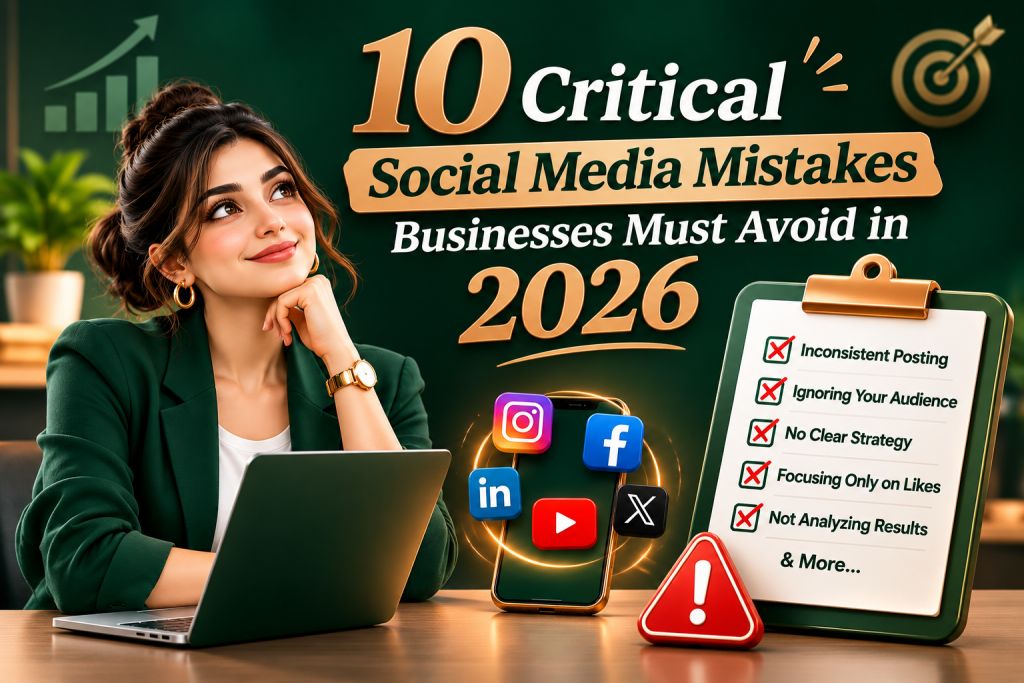
10 Critical Social Media Mistakes Businesses Must Avoid in 2026

10 Critical Social Media Mistakes Businesses Must Avoid in 2026 Avoid These 10 Costly Social Media Mistakes to Grow Your Business Social media is no longer just a digital playground. For modern brands, it is a primary revenue engine, a customer service hub, and the ultimate venue for brand storytelling.Yet, many businesses treat social media as an afterthought or a digital billboard. They dump random posts into the ether and wonder why their follower count is stagnant and their conversion rates are flat.If your social media strategy feels like a money pit, you are likely falling into common traps that alienate audiences and waste marketing dollars. Let’s break down the most critical social media mistakes your business must avoid today, along with actionable steps to turn your channels into growth engines. 1. Operating Without a Defined Strategy Many businesses start posting simply because they feel they “have to.” They create accounts across every major platform and publish content without a clear goal. This lack of direction leads to inconsistent messaging and wasted resources. The ProblemPosting aimlessly means you cannot measure success. If you do not know whether your goal is brand awareness, lead generation, or community building, you cannot optimize your content.  The Fix • Identify Key Performance Indicators (KPIs): Track metrics that match your goals, such as engagement rates for community building or click-through rates for lead generation.• Create a Content Calendar: Plan your topics, formats, and publishing dates at least two weeks in advance to maintain consistency. 2. Choosing the Wrong Platforms A common misconception is that a business needs to be active on Facebook, Instagram, LinkedIn, TikTok, X (formerly Twitter), and Pinterest all at once. This scattershot approach dilutes your efforts and burns out your marketing team.  The Problem Your target audience does not live on every platform. If you sell enterprise software (B2B), spending thousands of dollars on TikTok dances might not yield the same return as a data-driven LinkedIn article. Conversely, a trendy fashion brand will find more success on Instagram and TikTok than on LinkedIn. The Fix • Build Buyer Personas: Deeply analyze your ideal customers. Where do they spend their time? What kind of content do they consume?• Master One or Two Channels First: Dominate the platforms where your audience is most active before expanding your footprint.• Match Platform to Content: Ensure the format of the platform aligns with your business capabilities (e.g., choose YouTube or TikTok only if you have the resources to produce high-quality video). 3. Treating Social Media Like a One-Way Megaphone No one follows a brand online just to read endless sales pitches. or “Check out our latest sale!”, your audience will quickly unfollow you. The Problem Social media is designed to be social. It is a two-way dialogue, not a traditional television commercial. When you focus solely on self-promotion, you miss the opportunity to build genuine relationships and brand loyalty. The Fix • Apply the 80/20 Rule: Dedicate 80% of your content to providing value (education, entertainment, or inspiration) and only 20% to direct promotion.• Humanize Your Content: Share behind-the-scenes glimpses, employee spotlights, and user-generated content to show the people behind the logo. 4. Ignoring Negative Feedback and Customer Comments In the digital space, silence speaks volumes. When customers leave negative reviews, complaints, or critical comments on your posts, ignoring them or—worse—deleting them can severely damage your brand reputation.  The Problem Deleting complaints makes your business look dishonest or guilty. Ignoring them signals to your wider audience that you do not care about customer satisfaction. Prospective buyers look at how you handle criticism before trusting you with their money. The Fix • Respond Promptly and Politely: Acknowledge the issue publicly to show you care, but move the conversation to a private channel (like DM or email) to resolve it.• Develop a Crisis Protocol: Create standard guidelines for your social media team so they know how to handle trolls, genuine complaints, and PR emergencies calmly. 5. Chasing Vanity Metrics Over Real Value It feels great to see your follower count rise or to watch a post get thousands of likes. However, if those likes do not convert into website traffic, email sign-ups, or sales, they are nothing more than vanity metrics. The Problem High follower counts do not pay the bills. If you focus exclusively on superficial numbers, you might optimize your content for broad, irrelevant audiences while alienating the specific niche that actually buys your products. The Fix • Prioritize Conversion and Engagement: Focus on meaningful interactions, such as shares, saves, comments, and link clicks.• Track the Customer Journey: Use analytics tools to see how many social media users actually transition into your sales funnel.• Value Quality Over Quantity: It is far better to have 1,000 highly engaged followers who love your brand than 100,000 disengaged accounts that ignore your posts. 6. Neglecting Video Content The algorithms governing modern social media platforms heavily favor video. Text updates and basic static images no longer command the organic reach they once did. The Problem Failing to adopt short-form video (such as Instagram Reels, YouTube Shorts, and TikTok videos) or long-form video content makes your brand look outdated. It also severely limits your visibility, as platforms actively push video content to non-followers. The Fix• Keep It Raw and Authentic: You do not need a Hollywood budget or cinematic cameras. Smartphone video with good lighting and clear audio is often more relatable and effective.• Repurpose Existing Assets: Turn a high-performing blog post into a quick 60-second video script or record an interview snippet with a company expert.• Capitalize on Visual Storytelling: Use video to demonstrate complex product features, share quick tips, or walk viewers through a day in the office. 7. Buying Fake Followers and Engagement When businesses struggle to grow organically, they are often tempted by services that promise thousands of followers overnight for a small fee. This is a fatal mistake for any brand page. The ProblemPurchased followers are bots or inactive accounts. They will never buy your products,

Scroll to Top