
B2B Content Marketing Guide: Strategies That Drive Revenue
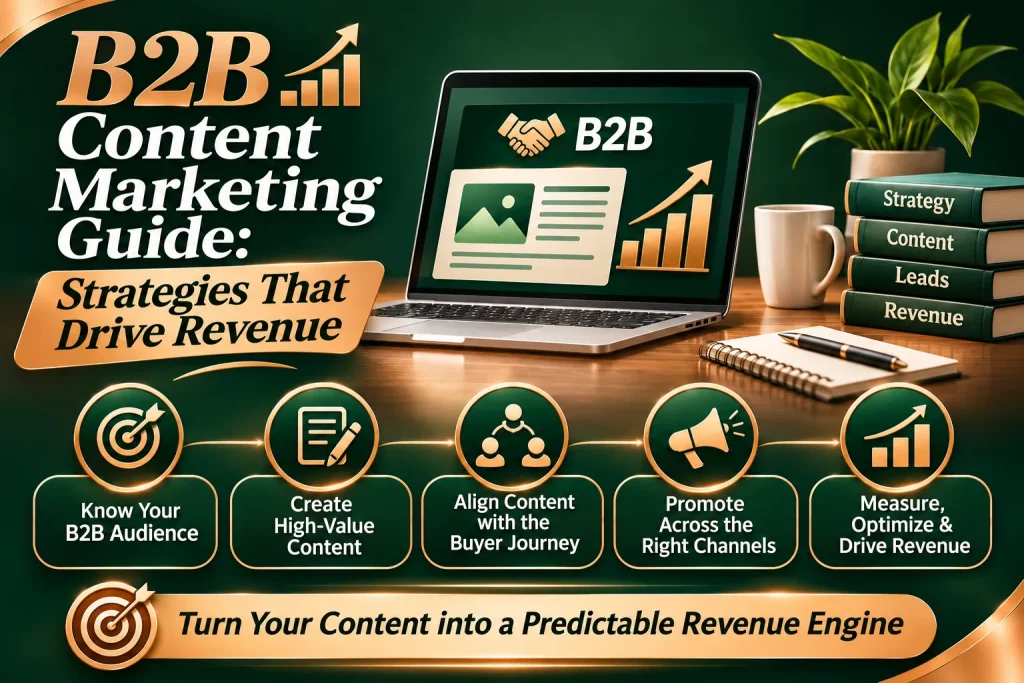
Stop wasting time on fluff. Master B2B content marketing with this practical guide to building a data-driven strategy that turns readers into buyers.
Let’s be honest: the old B2B playbook is completely dead.
Think back to how you bought software or hired an agency five years ago. You’d pick up the phone, hop on a demo, and let a sales rep guide you through the features. Today? That sounds exhausting. Modern B2B buyers are hyper-independent. We do our homework in the shadows long before we ever think about clicking that “Book a Demo” button. We read articles, tear apart case studies, scroll through communities, and compare tools completely on our own terms.
Here is the cold, hard truth: if your business isn’t showing up with the right answers during that quiet research phase, you simply don’t exist to them.
This is exactly why B2B content marketing isn’t just a side project or a nice-to-have line item in your budget—it is the foundation of modern pipeline generation. But let’s clarify one thing: this isn’t about churning out generic 500-word blog posts or clogging up feeds with corporate jargon. It’s about building a high-value ecosystem that grabs the right eyes, builds instant trust, and hooks major accounts.
Let’s skip the boring textbook definitions and dive straight into how you can build a content strategy that actually drives revenue.
The Reality Check: B2B vs. B2C
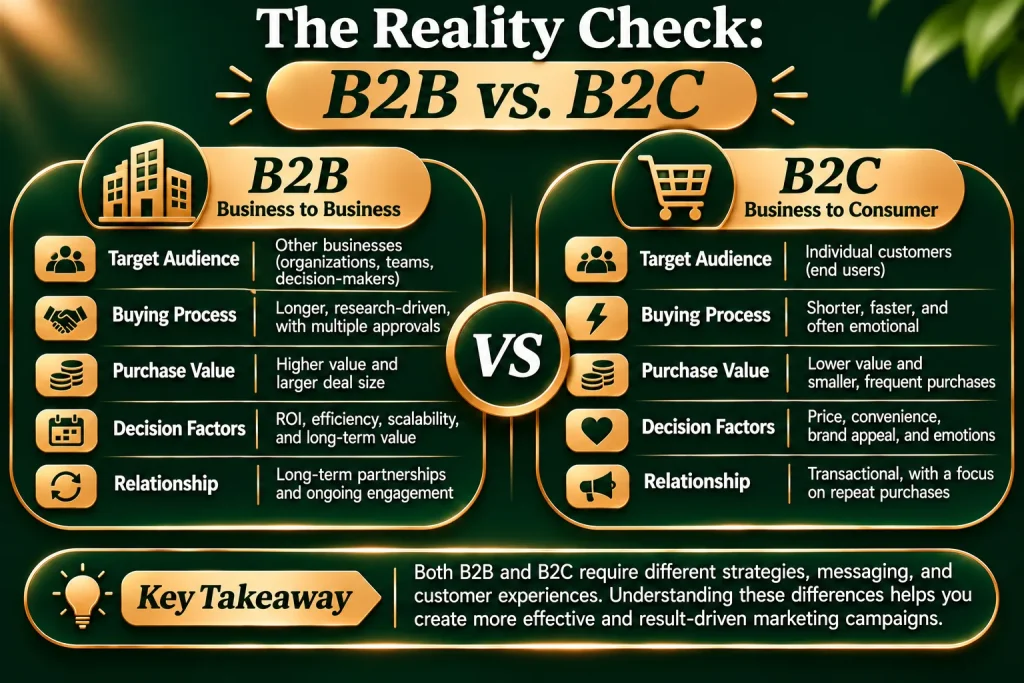
To win at this game, you need to throw the B2C playbook straight into the bin. B2C marketing wins by triggering fast, emotional impulses—like buying a pair of sneakers at midnight because of a flashy Instagram ad. B2B is a completely different world. It runs entirely on cold logic, operational efficiency, and proving a clear return on investment (ROI).
Here is what you are actually dealing with in B2B:
You are almost never selling to just one person. You have to convince the manager who will use the tool daily, the IT lead who worries about security, the CFO who hoards the budget, and the VP who signs the ultimate check. Your content needs to give all of them a reason to say yes.
B2B sales cycles don’t happen overnight; they take months. Your content needs to act as a patient guide, quietly nurturing leads and handling their doubts behind the scenes over a long period.
Because B2B contracts often run into tens or hundreds of thousands of dollars, mistakes can cost people their jobs. Buyers are naturally terrified of making the wrong choice. Your content’s primary job is to make buying from you feel like the safest bet they can make.
Setting Up Your Strategy (Without the Fluff)
Writing without a strategy is like driving in the dark without headlights—you might move forward, but you are going to crash. Before you open a blank document, you need a blueprint.
If you try to write for everybody, you end up connecting with nobody. Get hyper-specific about your target audience. Don’t just list their job titles; ask yourself the real questions:
• What daily bottleneck drives them absolutely crazy?
• What specific metrics are they judged on during their annual performance review?
Your content shouldn’t just look pretty; it needs a specific job to do. Break your content down into three clear stages:
1. Top of the Funnel (TOFU) – Awareness: This is educational content for people who realize they have a problem but aren’t sure how to fix it yet. Keep it broad and genuinely helpful. (e.g., “Why Your Team’s Supply Chain Expenses Are Skyrocketing This Quarter”)
2. Middle of the Funnel (MOFU) – Consideration: Here, the reader knows exactly what their problem is and is actively looking for options. Your job is to guide them toward your category. (e.g., “The Modern Manager’s Guide to Choosing Supply Chain Automation Tools”)
3. Bottom of the Funnel (BOFU) – Decision: This is where the gloves come off. The reader is ready to buy and is choosing between you and your top competitor. Use heavy-hitting proof.
Execution: Turning Strategy Into Action
Too many marketers get trapped chasing massive search volume because it looks great on monthly reports. In B2B, random traffic doesn’t pay the bills—the right traffic does. Focus heavily on intent. A long-tail keyword like “enterprise CRM platform for real estate brokers” might only get 50 searches a month, but the person typing that is practically holding their credit card out. Target those high-intent, problem-solving keywords first.
Write Like a Human, Not a Corporate Robot
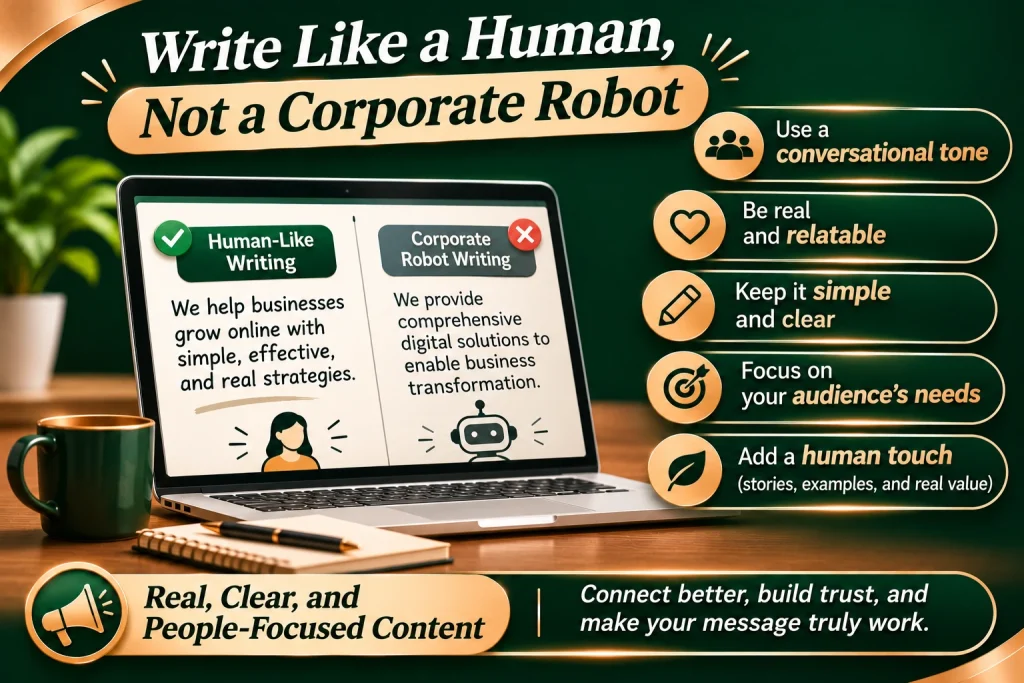
The absolute biggest mistake in B2B writing is hiding behind complex jargon to sound “professional.” It just makes your writing incredibly boring and hard to read. Remember, executives are just regular people who happen to be at work.
• Be Actionable: Don’t just explain what a concept is. Tell them exactly how to implement it tomorrow morning.
• Bring the Receipts: Back up your claims with real-world data, internal statistics, and reputable industry studies.
• Keep it Punchy: Write clear, short sentences. Use conversational language. If you wouldn’t say a phrase out loud to a colleague over coffee, don’t write it in your blog.
If you are evaluating your content’s success solely based on page views or social media likes, you are setting yourself up for frustration. Vanity metrics lie. To understand if your content is actually working, you need to track indicators that tie directly to your sales pipeline:
• Marketing Qualified Leads (MQLs): How many people loved an article enough to download an in-depth ebook, sign up for your newsletter, or register for a webinar?
• Content-Influenced Pipeline: Look at your recently closed deals. Did those buyers read three of your blogs or download a case study before reaching out to sales?
• Conversion Rate Optimization (CRO): Are your informational blog posts successfully guiding readers to your product or booking pages?
Ready to Scale Your B2B Growth?
Building a consistent, high-performing content engine takes serious time, deep research, and a lot of trial and error. If you want to skip the guesswork, bypass the creative block, and start generating high-quality leads that actually want to talk to your sales team, let our expert strategists do the heavy lifting for you.
Frequently Asked Questions

Content marketing is a marathon, not a sprint. Typically, you will start seeing sustainable organic search growth and consistent lead generation within 3 to 6 months. However, you can speed this up significantly by distributing your content through targeted email campaigns and engaging directly on LinkedIn.
While short posts have their place, long-form, deeply researched blog posts, actionable whitepapers, and real-world case studies consistently deliver the highest conversion rates because they thoroughly address complex business problems.
Absolutely not. In B2B, quality completely crushes quantity. Publishing one incredibly thorough, original, and deeply valuable article every single week will yield far better results than publishing rushed, mediocre pieces every day. Consistency and value are what build trust.A