

Khushitechs:Turning Clicks Into Customers
What Is Search Engine

A search engine is a software system that helps users find information on the internet by entering keywords, questions, or phrases. Popular search engines include Google, Bing, Yahoo, and DuckDuckGo. When a user enters a query, the search engine searches through its huge database of web pages and displays the most relevant results. Search engines generally work through three major processes: crawling, indexing, and ranking. Crawlers or bots discover and scan web pages, indexing stores and organizes information from those pages, and ranking algorithms determine which pages should appear first for a particular search query.Search engines use complex algorithms and artificial intelligence to understand the meaning and intent behind a search rather than simply matching individual words. They consider hundreds of signals, such as the relevance and quality of content, keywords, website structure, page experience, links, freshness of information, location, and sometimes the user’s search context. For example, if someone searches for “best digital marketing agency in India,” the search engine tries to understand that the user is looking for agencies that are relevant to digital marketing and located in India.
Difference Between Search Engine And Browser?
Search Engine
SEARCH ENGINE
Search Engine:
A search engine is an online service that helps users find information, websites, images, videos, and other content on the internet. It works by searching its index of web pages and showing the most relevant results according to the user's query. Examples of search engines include Google, Bing, Yahoo, and DuckDuckGo. Search engines are mainly used for discovering information and finding websites.pe your paragraph.
Web Browser
BROWSER
Web Browser:
A web browser is a software application that allows users to access, open, and interact with websites on the internet. It sends requests to web servers and displays webpages, images, videos, and other online content on the user's device. Examples of web browsers include Google Chrome, Mozilla Firefox, Microsoft Edge, and Safari. Browsers are mainly used for viewing and interacting with websites.
How Does Search Engine Optimization Work ?
Search Engine Optimization (SEO) works by improving a website so that search engines like Google can better **discover, understand, evaluate, and rank its pages** for relevant searches. When someone enters a query, Google first looks through its index of webpages and identifies pages that may provide useful answers. It then considers many signals, including how closely the content matches the search intent, the quality and usefulness of the information, website structure, page experience, mobile usability, and the authority or reputation of the site. SEO generally begins with **keyword and search-intent research**, followed by creating helpful and relevant content around the topics people are searching for. **On-page SEO** improves elements such as titles, headings, URLs, internal links, images, and content structure, while **technical SEO** helps search engines crawl and index the website efficiently and ensures that important pages can be accessed properly. **Off-page SEO**, including earning relevant and trustworthy backlinks, can also help search engines understand the credibility of a website. Search engines continuously crawl and process webpages, update their indexes, and adjust rankings as information and search behavior change.
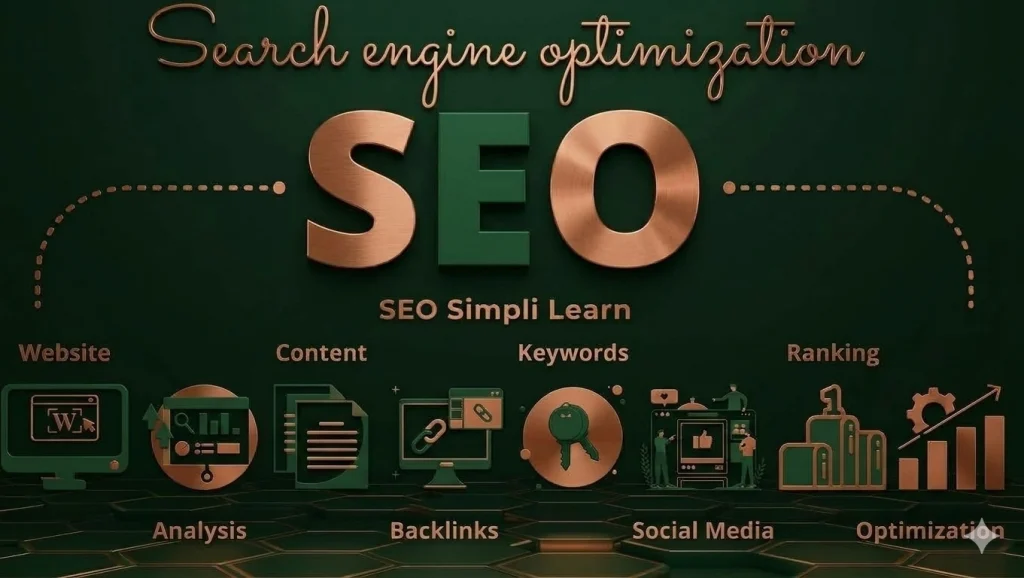
Different Faces Of SEO That Drive Digital Success

What Is -ON PAGE SEO
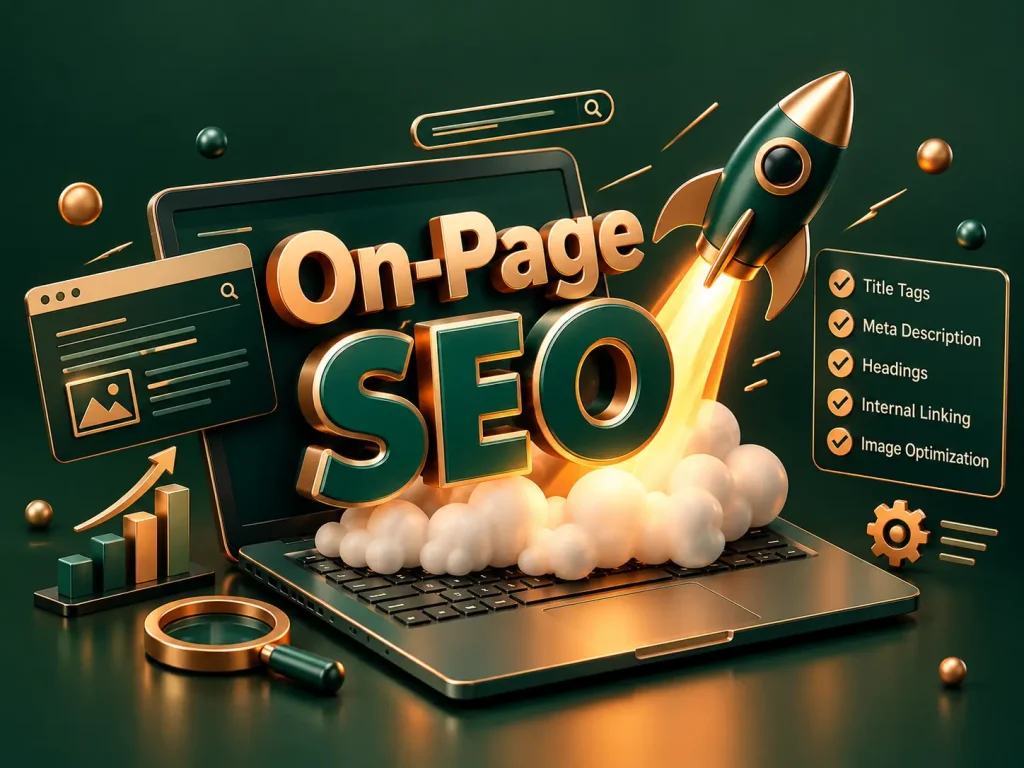
On-Page SEO is the process of optimizing the elements that are present directly on a webpage to help search engines understand the page and help users find useful, relevant information. It focuses on the content, structure, HTML elements, and overall organization of a page. The main goal is to make a webpage more relevant to a user’s search query while keeping the content clear, useful, and easy to navigate. Unlike off-page SEO, which focuses on external signals such as backlinks, on-page SEO is mainly about improving the website itself.One of the most important parts of on-page SEO is content optimization. Content should provide useful information that matches what users are actually searching for, rather than simply repeating keywords. Keyword research helps identify relevant topics and phrases, but keywords should be used naturally in important areas such as the main heading, introductory content, subheadings, and body text when appropriate.
Why Is -ON PAGE SEO Important For Your Website?
On-Page SEO is important because it helps search engines understand what your webpages are about and determine whether they are relevant to a user’s search. When important elements such as page titles, headings, content, URLs, images, internal links, and keywords are properly optimized, search engines can more easily interpret the topic and purpose of a page. This gives your website a better opportunity to appear for relevant searches and helps users find the information they are looking for.Another major benefit of on-page SEO is that it improves the quality and usability of your website’s content. Well-structured headings, readable paragraphs, descriptive titles, optimized images, and relevant internal links make it easier for visitors to navigate and understand your pages. When users can quickly find useful information and have a smooth experience, they are more likely to explore additional pages, interact with your website, or take an action such as contacting your business.
What Is - OFF PAGE SEO
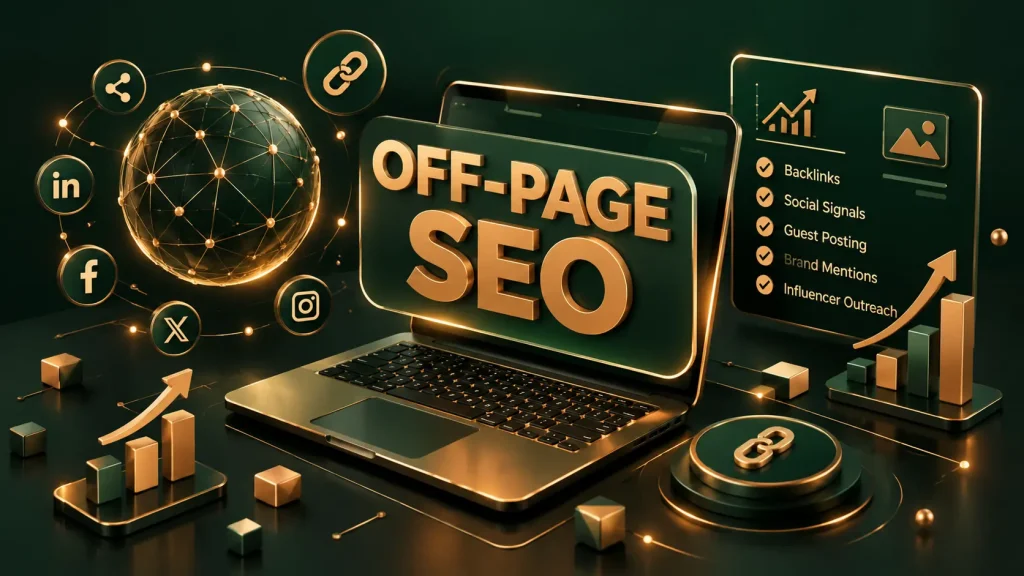
Off-Page SEO refers to all the activities performed outside your own website to improve its visibility, credibility, authority, and reputation in search engines. While on-page SEO focuses on optimizing the content and elements of your website, off-page SEO focuses on building signals from other websites and online platforms that can help search engines understand how trustworthy and valuable your website may be. One of the best-known parts of off-page SEO is link building, where other relevant websites link to your pages. When these links are earned from reputable and relevant websites, they can help search engines discover your content and may contribute to the authority of your pages. off-page SEO is not limited to backlinks. It can also involve digital PR, brand mentions, content promotion, business listings, relevant online communities, partnerships, and other legitimate activities that increase awareness of your brand.
The Given Below Are The Main Techniques Used in Off-Page SEO
1. **Link Building** – Earning high-quality backlinks from relevant and trustworthy websites to improve website authority.
2. **Guest Posting** – Publishing useful content on relevant external websites while gaining exposure and, where appropriate, backlinks.
3. **Digital PR** – Getting your business, website, or content mentioned by online publications, news websites, and industry platforms.
4. **Social Media Marketing** – Promoting content across social platforms to increase visibility, engagement, and potential website traffi
5. **Influencer Outreach** – Collaborating with relevant creators or industry influencers to increase brand awareness and reach.
6. **Brand Mentions** – Building online references to your brand across websites, blogs, forums, and other relevant platforms.
7. **Local SEO & Citations** – Maintaining accurate business information across relevant directories and local platforms to strengthen local visibility.
8. **Content Promotion** – Sharing valuable blogs, guides, infographics, and other content through relevant communities and platforms.
9. **Online Reviews** – Encouraging genuine customer reviews on relevant platforms to build trust and strengthen local/business reputation.
Behind the Scenes of Technical SEO

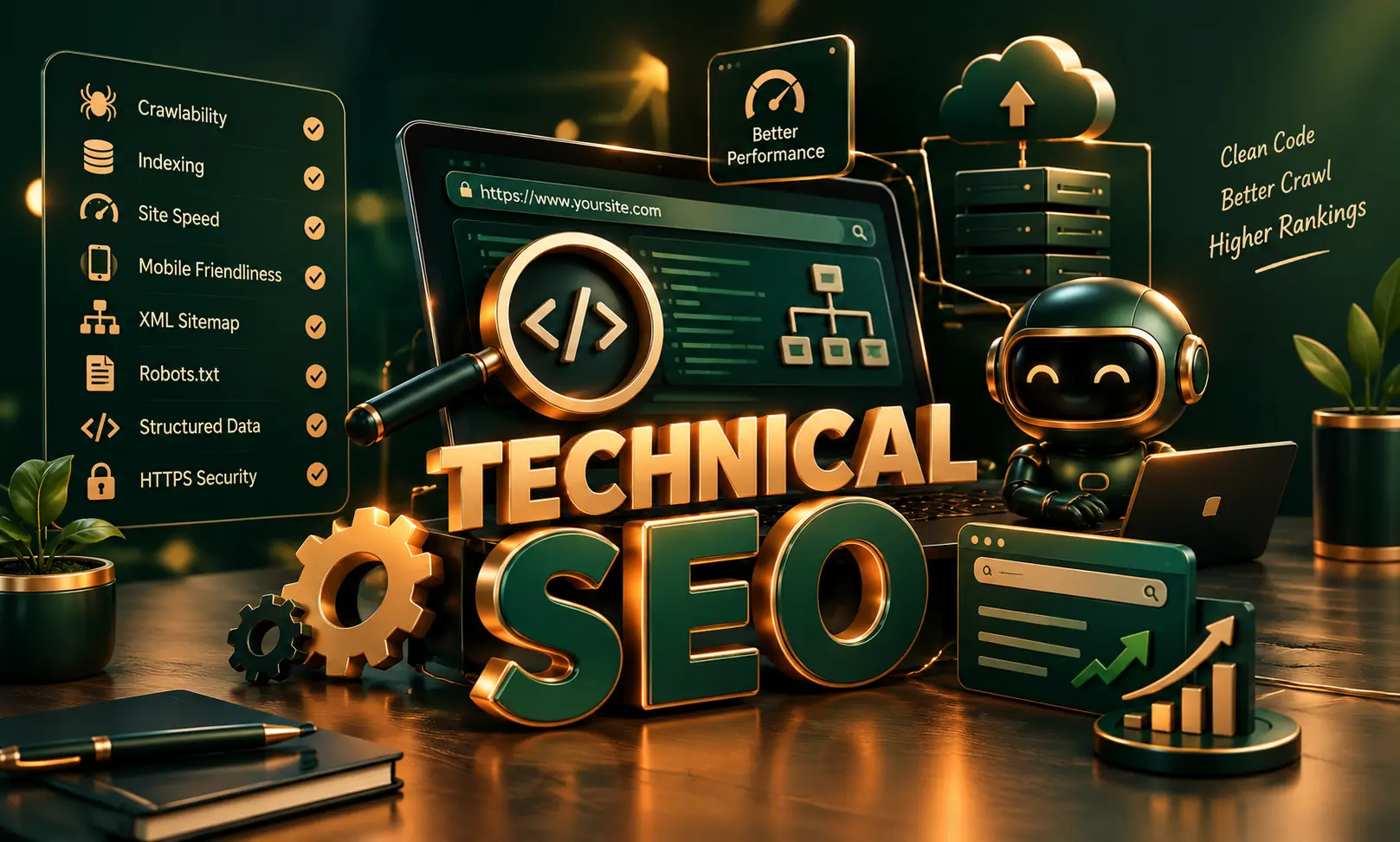
Technical SEO is the behind-the-scenes part of SEO that focuses on improving the technical structure and performance of a website so that search engines can easily **crawl, understand, index, and rank its pages**. Unlike content SEO, which focuses mainly on what users see on a webpage, technical SEO works on elements such as website speed, mobile responsiveness, URL structure, XML sitemaps, robots.txt, internal linking, redirects, canonical tags, and website security. A technically well-optimized website makes it easier for search-engine crawlers to discover and understand important pages while also providing a smooth experience for visitors. Technical SEO also involves fixing broken links, duplicate-content issues, indexing problems, and errors that may prevent search engines from accessing important content. Website performance is another important area, including improving loading speed and Core Web Vitals such as loading performance, interactivity, and visual stability. HTTPS security, structured data, proper HTML structure, and mobile-friendly design can further help search engines interpret and access a website effectively. Overall, technical SEO creates a strong foundation for the rest of an SEO strategy because even high-quality content may struggle to perform if search engines cannot properly crawl, index, or understand the website.
Essential Components of Technical SEO
Black Hat
Black Hat SEO refers to **SEO techniques that violate or manipulate search-engine guidelines** to achieve higher rankings quickly. It focuses on trying to manipulate search results rather than improving the website for users. Common examples include **keyword stuffing, cloaking, hidden text, link schemes, and automatically generated low-quality content**. These methods may sometimes produce short-term results, but they can harm a website's reputation and visibility .
White Hat
White Hat SEO refers to **ethical SEO techniques that follow search-engine guidelines**. It focuses on creating **high-quality content, using relevant keywords, improving user experience, and building genuine backlinks**. These techniques aim to achieve **long-term and sustainable search-engine visibility** without manipulating rankings.
Gray Hat
Gray Hat SEO refers to **SEO techniques that fall between White Hat and Black Hat SEO**.These methods may not clearly violate search-engine guidelines but can involve **risky or questionable practise.Gray Hat SEO may provide short-term benefits, but it can carry **potential risks if search engines .

BLACK HAT SEO
refers to SEO techniques that attempt to improve a website’s search-engine rankings by **manipulating search-engine guidelines or exploiting loopholes**, rather than improving the website through legitimate, user-focused optimization. These techniques may sometimes produce quick improvements in rankings, but they can create long-term risks for a website because search engines continuously work to detect and reduce the impact of manipulative practices. Common examples of Black Hat SEO include **keyword stuffing, hidden text or links, cloaking, creating low-quality or automatically generated pages solely to manipulate rankings, buying or exchanging links intended to manipulate rankings, and creating doorway pages**. Another technique is using duplicate or copied content at scale to target multiple search queries without providing meaningful additional value to users. Search engines may respond to such practices by reducing the visibility of affected pages or applying manual actions when violations are identified. Black Hat SEO is therefore different from **White Hat SEO**, which focuses on creating useful content, improving website structure and performance, earning relevant links, and providing a good user experience.
WHITE HAT SEO
refers to the ethical and search-engine-friendly techniques used to improve a website’s visibility and rankings while following search-engine guidelines. Instead of trying to manipulate search results, White Hat SEO focuses on providing **genuine value to users, creating high-quality content, and improving the overall experience of a website**. It includes techniques such as thorough keyword research, creating useful and original content, optimizing titles and headings, improving website speed and mobile-friendliness, building a clear internal linking structure, earning relevant backlinks naturally, optimizing images, and maintaining a technically healthy website. White Hat SEO also focuses on understanding the search intent behind users’ queries and providing content that directly answers their questions or solves their problems. Unlike Black Hat SEO, which may attempt to achieve quick results through manipulative methods, White Hat SEO generally takes more time and consistent effort but provides a more sustainable approach to building search visibility. It also involves regularly updating outdated content, fixing technical issues, improving website usability, and following search-engine quality guidelines. Overall, **White Hat SEO is about optimizing a website for both users and search engines .


GRAY HAT SEO
refers to SEO techniques that fall somewhere between **White Hat SEO and Black Hat SEO**. These techniques may not always be explicitly prohibited by search-engine guidelines, but they can involve strategies that are designed primarily to influence search rankings rather than simply improve the user experience. Gray Hat SEO is often used by website owners who want faster results than traditional White Hat SEO may provide while avoiding clearly manipulative Black Hat practices. Examples can include **aggressive link-building methods, purchasing links without clear disclosure, creating multiple websites or pages mainly to support a primary website, repurposing existing content with limited additional value, and using expired domains to build authority**. Whether a particular technique is considered Gray Hat can depend on how it is implemented and the guidelines of the search engine involved. For example, creating useful content and earning relevant links naturally is generally considered White Hat, whereas creating large numbers of low-quality links solely to manipulate rankings can move into Black Hat territory. Gray Hat SEO therefore carries more uncertainty and risk than guideline-focused SEO because search engines can change their algorithms or policies, causing previously tolerated tactics to lose effectiveness or create problems. In general, businesses seeking sustainable organic growth should prioritize .
SEO Approaches Comparison
Black Hat SEO
White Hat SEO
Gray Hat SEO
Boost Your Rankings With Smarter SEO Tools & Strategis
Frequently Asked Questions
SEO (Search Engine Optimization) is the process of improving a website so that it can appear more prominently in organic (unpaid) search-engine results when people search for information, products, or services related to that website.
SEO (Search Engine Optimization) is important because it helps a website become more visible in search-engine results and reach people who are actively searching for related information, products, or services. A well-optimized website makes it easier for search engines to understand its content and helps users discover relevant pages
SEO is a long-term process, and the time required to see noticeable results can vary depending on the website’s age, competition, industry, content quality, technical condition, and the SEO strategy being used.
SEO and paid advertising are two different digital marketing approaches, and their suitability depends on the business goals, budget, timeline, and target audience. SEO focuses on improving a website’s organic visibility in search results through content optimization, technical improvements, keyword targeting, and authority building.
At Khushitechs, we help improve your website’s search visibility through a structured and result-focused SEO strategy. We begin with keyword research to identify relevant search terms that your target audience is using. We then optimize important on-page elements such as titles, headings, meta descriptions, URLs, content, images, and internal links so search engines can better understand each page.
About Us
At Khushitechs, we believe every brand has a story worth being seen. We combine creativity, technology, data, and smart digital strategies to help businesses build a stronger online presence.
- +(91)956-9548-565
- khushithkur1810@gemail.com
- E1/E-1475, Haveliya, Jhusi, Prayagraj, Uttar Pradesh 211019