What is Digital Marketing: A Beginner’s Roadmap for 2026
Search engines (Google, Bing)
- Websites
- Social media platforms
- Mobile apps
- Online advertisements
- Video platforms like YouTube
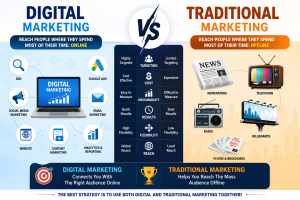
Unlike traditional marketing (newspapers, TV, and radio), digital marketing allows businesses to reach the right audience, measure results, and improve campaigns in real time.
Why Is Digital Marketing Important in 2026?
Digital marketing is growing faster than ever because:
- More people shop online.
- Mobile usage continues to increase.
- AI tools make marketing smarter.
- Businesses of every size need an online presence.
- Customers research products before purchasing.
Whether you’re running a local business or a global company, digital marketing helps attract, engage, and convert customers.
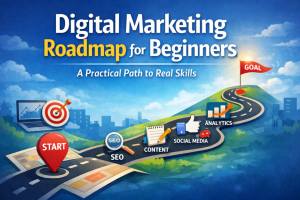
The Beginner’s Digital Marketing Roadmap (2026)
Step 1: Learn the Basics
Start by understanding:
- What digital marketing is
- Customer journey
- Marketing funnel
- Target audience
- Brand awareness
- Leads and conversions
These concepts form the foundation of every marketing strategy.
Step 2: Build a Website
Your website is your online storefront.
A good website should have:
- Fast loading speed
- Mobile-friendly design
- Easy navigation
- Clear call-to-action buttons
- Secure HTTPS connection
- Quality content
Without a professional website, digital marketing becomes much less effective.
Step 3: Learn SEO (Search Engine Optimization)
SEO helps your website appear higher on search engines without paying for ads.
Key SEO topics include:
On-Page SEO
- Keyword research
- Optimized headings
- Meta titles
- Meta descriptions
- Internal linking
- Image optimization
Off-Page SEO
- Backlinks
- Guest posting
- Brand mentions
Technical SEO
- Website speed
- XML sitemap
- Mobile optimization
- Structured data
SEO is one of the most valuable long-term digital marketing skills.
Step 4: Master Content Marketing
Content is the foundation of successful digital marketing.
Examples include:
- Blog posts
- Videos
- Infographics
- E-books
- Case studies
- Guides
- Podcasts
Useful content builds trust and attracts potential customers.
Step 5: Learn Social Media Marketing
Businesses use social media to:
- Build communities
- Increase brand awareness
- Drive website traffic
- Generate leads
- Improve customer relationships
Popular platforms include:
- X
- YouTube
Choose platforms based on where your audience spends time.
Step 6: Understand Google Ads
Google Ads lets businesses appear at the top of search results through paid advertising.
Campaign types include:
- Search Ads
- Display Ads
- Shopping Ads
- Video Ads
- Performance Max
- App Campaigns
Google Ads delivers quick traffic when campaigns are optimized effectively.
Step 7: Learn Social Media Advertising
Paid advertising is available on:
- TikTok
- YouTube
Benefits include:
- Advanced audience targeting
- Budget control
- Performance tracking
- High scalability
Step 8: Understand Email Marketing
Email marketing helps businesses:
- Welcome new customers
- Promote products
- Share newsletters
- Recover abandoned carts
- Build customer loyalty
A strong email strategy can deliver excellent long-term results.
Step 9: Learn Analytics
Digital marketing relies on data.
Track metrics such as:
- Website visitors
- Bounce rate
- Conversion rate
- Click-through rate (CTR)
- Return on investment (ROI)
- Cost per click (CPC)
Understanding these numbers helps improve marketing performance.
Step 10: Explore AI in Digital Marketing
AI is transforming digital marketing in 2026 by helping marketers:
- Generate content
- Create ad copy
- Analyze customer behavior
- Personalize campaigns
- Improve SEO research
- Automate repetitive tasks
AI saves time, but human creativity and strategy remain essential.
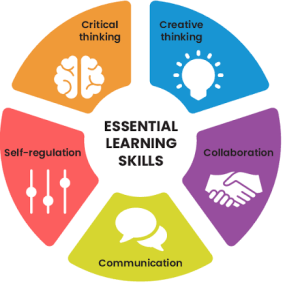
Essential Skills for Beginners
Develop these skills over time:
- SEO
- Content writing
- Graphic design basics
- Video editing
- Copywriting
- Google Ads
- Social media management
- Analytics
- AI tools
- Communication
Free Practice Ideas
Start learning by creating your own projects:
- Build a personal blog.
- Create social media pages.
- Write SEO-friendly articles.
- Run a small ad campaign.
- Analyze website traffic.
- Create email campaigns.
- Design simple graphics.
Practical experience is the fastest way to improve.
Common Mistakes Beginners Should Avoid
- Ignoring SEO
- Posting without a strategy
- Focusing only on followers instead of engagement
- Not tracking campaign performance
- Publishing low-quality content
- Giving up too quickly
- Overlooking mobile optimization
Career Opportunities in Digital Marketing
Digital marketing offers many career paths, including:
- SEO Specialist
- Content Writer
- Social Media Manager
- PPC Specialist
- Email Marketing Executive
- Digital Marketing Executive
- Marketing Analyst
- Content Strategist
- Freelance Digital Marketer
- Digital Marketing Consultant
Many professionals also start their own agencies or online businesses.
Best Tools for Beginners
- Google Analytics
- Google Search Console
- Google Ads
- Canva
- WordPress
- ChatGPT
- Grammarly
- Meta Business Suite
- Google Keyword Planner
Learning a few tools well is more valuable than trying to master dozens at once.
Final Thoughts
Digital marketing in 2026 is about understanding your audience, creating valuable content, using the right platforms, and continuously improving based on data. You don’t need to master every channel at once—start with the basics, practice consistently, and build your skills step by step.
Whether your goal is to grow a business, become a freelancer, or start a career, digital marketing offers opportunities for learners who stay curious and keep adapting to new technologies.
FAQs
1. What is digital marketing in simple words?
Digital marketing is the promotion of products or services using online channels like search engines, websites, social media, email, and online ads.
2. Is digital marketing a good career in 2026?
Yes. As businesses continue to invest in their online presence, demand for digital marketing professionals remains strong.
3. Do I need coding skills to learn digital marketing?
No. Basic technical knowledge is helpful, but most digital marketing roles do not require coding.
4. Which skill should beginners learn first?
Start with SEO, content marketing, and social media marketing before moving on to paid advertising and analytics.
5. How long does it take to learn digital marketing?
You can understand the fundamentals in a few weeks, but becoming proficient typically takes several months of consistent practice.
6. Can I learn digital marketing for free?
Yes. Many high-quality tutorials, articles, videos, and free tools are available online to help beginners get started.
7. Is AI replacing digital marketers?
No. AI assists with automation and content creation, but strategy, creativity, and decision-making still require human expertise.
8. What are the main types of digital marketing?
The main types include SEO, content marketing, social media marketing, email marketing, PPC advertising, affiliate marketing, influencer marketing, and mobile marketing.
9. Is a website necessary for digital marketing?
A website is highly recommended because it serves as the central hub for your online presence and marketing efforts.
10. What is the first step to becoming a digital marketer?
Learn the fundamentals, build a simple website or blog, practice with real projects, and continue improving your skills through hands-on experience.
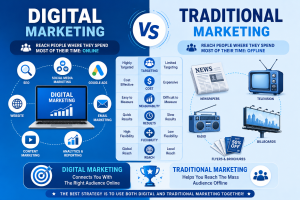
 Digital marketing targets people based on: